


What is a Greatest Eastern Elongation?
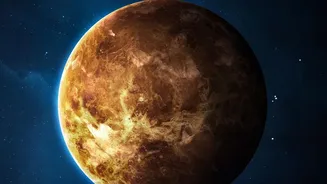
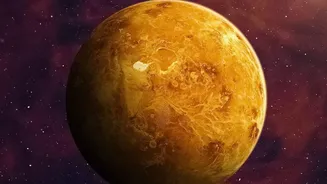
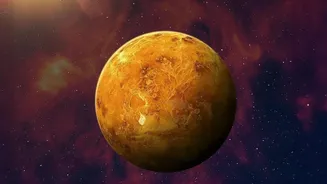
In simple terms, greatest eastern elongation is when Venus appears at its farthest point from the Sun in our evening sky. Because Venus orbits the Sun inside of Earth's own orbit, it's like a dog on a leash, never straying too far from the Sun's position
from our viewpoint. This event marks the moment in its orbit when that leash is stretched to its maximum length in the evening. Astronomers call it an 'eastern' elongation because Venus is to the east of the Sun on the sky's dome. For us on the ground, this means it will be visible for the longest duration after sunset, giving us a fantastic window to observe it before it dips below the horizon.
Your Guide to Spotting the Evening Star
The best part about this celestial event is its accessibility. You don’t need a telescope or any special equipment. Simply find a clear view of the western horizon around 30 to 90 minutes after sunset. Venus will be unmistakable. Shining with a brilliant, steady light at a magnitude of around -4.4, it will be the brightest object in the sky after the Moon. Unlike twinkling stars, Venus shines with a constant, silvery glow. Look for it in the constellation Virgo. For an added treat, a thin crescent Moon will pass near Venus on August 16, creating a beautiful pairing in the twilight sky.
Why Venus Shines So Brightly
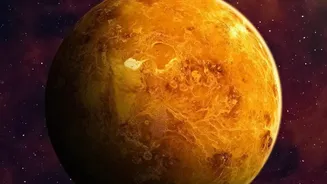
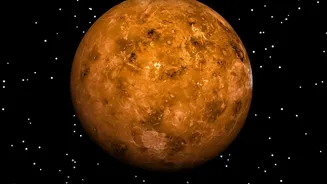
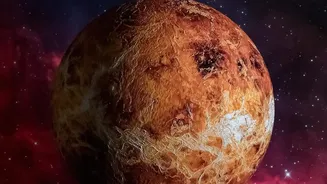
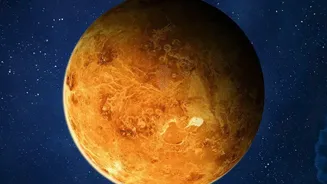
Venus’s reputation as the 'Evening Star' or 'Morning Star' comes from its exceptional brightness. It’s not a star at all, but a planet, and its brilliance is due to a combination of factors. First, it is shrouded in thick clouds of sulphuric acid that are highly reflective, bouncing a huge amount of sunlight back into space. Second, its orbit brings it relatively close to Earth, making it appear larger and brighter than any other planet. In fact, under the right conditions from a very dark location, Venus can be bright enough to cast faint shadows.
The Dance of the Inner Planets
Only the two planets with orbits inside of Earth's — Mercury and Venus — experience greatest elongations. This is because, from our perspective, they are forever tethered to the Sun, swinging from one side to the other. Outer planets like Mars, Jupiter, and Saturn can appear anywhere in the night sky, even directly opposite the Sun (an event called opposition). The entire cycle for Venus, from one evening elongation to the next, takes about 584 days. During this time, it transitions from being the 'Evening Star' to disappearing in the Sun's glare, and then re-emerging as the 'Morning Star' before its next evening appearance.
What Happens After August 15?
Greatest elongation marks the peak of Venus's evening appearance. After this date, it will begin its journey back toward the Sun from our vantage point. Each evening, it will appear slightly lower in the sky at sunset, eventually becoming lost in the Sun's glare by October. The planet will then pass between the Earth and the Sun (an event called inferior conjunction) before reappearing in the predawn eastern sky as the Morning Star later in the year. So, while Venus will remain a beautiful evening object for several more weeks, this mid-August period offers the prime opportunity to see it at its highest and most magnificent.