







A Queen's Devoted Fast
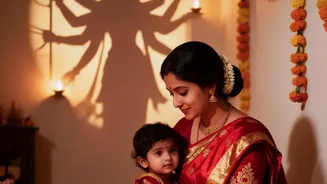
The story begins with the beautiful Queen Veeravati, the only and adored sister of seven powerful brothers. Happily married to a king, she decided to observe her first Karwa Chauth fast at her parents' home. Following tradition, she undertook a strict
'nirjala' fast, abstaining from both food and water from sunrise, with the sole intention of praying for her husband's long life and well-being. As the day wore on, however, the rigours of the fast took their toll. Weakened by hunger and thirst, Veeravati struggled to endure, anxiously awaiting the rise of the moon, which would signal the end of her observance.
A Loving Deception
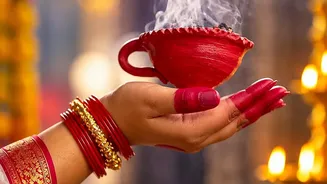
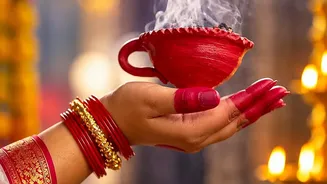
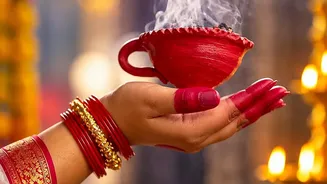
Seeing their beloved sister in distress, her seven brothers were overcome with concern. Unable to bear her suffering, they devised a plan born of compassion. One of the brothers climbed a distant Pipal tree, holding a lamp and a mirror, or a sieve, to create an illusion of the moon shining through the foliage. The others then rushed to Veeravati, telling her that the moon had finally risen and she could break her fast. Trusting them completely, the exhausted queen looked to the false moon, made her offerings, and ate her first morsel of food.
The Heartbreaking Consequence
The repercussions of this premature breaking of the fast were immediate and devastating. As Veeravati took her first bite, ill omens appeared: she sneezed or found a hair in her food. Moments later, a messenger arrived with the terrible news that her husband, the king, had suddenly died. Heartbroken, Veeravati understood that her fast had been broken improperly due to the deception. She began her journey to her husband's kingdom, wracked with grief and guilt, determined to understand what had happened and seek a way to reverse the tragedy.
Divine Counsel and Redemption
On her journey, she encountered Goddess Parvati (in some versions, Goddess Indrani), who explained the cause of her husband's demise. The Goddess informed her that the king had died because she had broken her fast after seeing a false moon. Moved by Veeravati's sincere remorse and unwavering devotion, the Goddess offered her a path to redemption. She instructed Veeravati that her husband could be revived, but only if she observed the Karwa Chauth fast again, this time with absolute adherence to the rituals. In some tellings, she is advised to observe the fast on every 'chaturthi' (fourth day of the lunar month) for a full year.
From Legend to Lasting Ritual
Veeravati followed the divine guidance with unflinching faith. She undertook the arduous penance, and upon the next Karwa Chauth, she completed the fast flawlessly, waiting for the real moon to rise before making her offerings. Her devotion was rewarded when her husband was miraculously brought back to life. This powerful story is why the Karwa Chauth 'katha' (story) is considered a central part of the evening puja. The narrative serves as both a guide and a cautionary tale, emphasising the importance of patience, sincerity, and completing the vow as intended. The sieve, once a tool of deception in the story, has transformed into an essential element of the ritual, used to view the real moon and filter out any negativity, ensuring the fast is broken with purity and true devotion.