



The High-Speed Dream
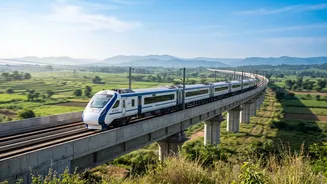
The Delhi-Varanasi High-Speed Rail (DVHSR) corridor is a proposed 'bullet train' project that aims to connect the two cities over a distance of approximately 865 kilometres. With trains designed to operate at speeds up to 320 km/h, the journey time is expected
to be just under four hours. This ambitious undertaking is part of India's larger plan to develop a network of high-speed rail lines, with the DVHSR corridor being one of seven new routes announced in the Union Budget 2026-27. The project is being managed by the National High Speed Rail Corporation Limited (NHSRCL), the same agency handling India's first bullet train project between Mumbai and Ahmedabad.
Today's Reality: An Eight-Hour Journey
To truly appreciate the scale of this proposed transformation, consider the current travel time. As of late 2026, the fastest train between New Delhi and Varanasi is the Vande Bharat Express, which completes the journey in approximately eight hours. Other services like the Rajdhani and Duronto expresses take even longer, often between 11 and 13 hours, depending on the route and number of stops. The high-speed corridor would effectively halve the travel time of today's fastest option, representing a monumental leap in connectivity between the national capital and eastern Uttar Pradesh.
Mapping the Route
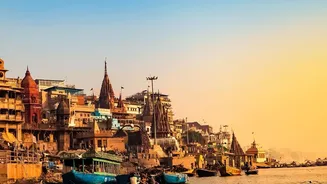
The proposed route will be a game-changer for regional travel, connecting several key religious, tourist, and economic hubs. The line is planned to originate from Sarai Kale Khan in Delhi and pass through 12 stations, including Noida, the upcoming Noida International Airport at Jewar, Mathura, Agra, Lucknow, and Prayagraj, before terminating in Varanasi. A spur line connecting Lucknow to Ayodhya is also part of the plan, further enhancing connectivity to major pilgrimage sites. The inclusion of cities like Agra and Mathura means tourists could easily access the 'Golden Triangle' and other significant cultural landmarks.
What's the Current Status?
The project is currently in the advanced planning and pre-construction phase. The National High Speed Rail Corporation Limited has completed crucial groundwork, including aerial LiDAR surveys to finalise the alignment. As of mid-2026, the alignment through key areas like Gautam Buddha Nagar (Noida) has been finalised, and utility surveys are underway to prepare for construction. However, major construction has not yet begun. The Detailed Project Report (DPR) has been submitted, and the project is awaiting final sanctions before land acquisition and construction can commence on a large scale. No official completion date has been set, but such large-scale infrastructure projects typically take several years to build.
Beyond Just a Faster Train
The impact of the DVHSR project extends far beyond just reducing travel time. It is envisioned as an economic corridor that will spur development across Uttar Pradesh. By connecting industrial, religious, and political centres, the line is expected to boost tourism, facilitate business travel, and create new opportunities for regional growth. The project also represents a significant step in modernising India's railway infrastructure, moving towards a more sustainable and efficient mode of mass transport. As seen with the Mumbai-Ahmedabad corridor, these projects involve immense engineering challenges and significant investment, estimated to be around ₹1.71 lakh crore for the Delhi-Varanasi line.