




Why 'Getting Healthier' Isn't a Goal
Starting a fitness journey with a goal like "get in shape" or "be healthier" feels intuitive, but it’s a recipe for failure. These ambitions lack the structure and direction needed to keep you going. Psychology tells us that goals create focus and purpose,
but only when they are specific and measurable. Without a clear target, it's impossible to know what actions to take or to feel a sense of accomplishment. When workouts feel random and progress is invisible, motivation naturally disappears. The problem isn't a lack of willpower; it's a lack of clarity. A goal you can't measure is just a wish.
Outcome vs. Process: The Two Types of Goals
Effective goal-setting involves understanding two distinct types: outcome goals and process goals. An outcome goal is the final result you want, such as losing 10 kilograms, running a 5K race, or fitting into an old pair of jeans. While these are motivating, they are often long-term and not entirely within your control. A bad week or a slow start can make the outcome feel distant and discouraging. Process goals, on the other hand, are the daily and weekly actions you take to achieve the outcome. Examples include working out three times a week, drinking a certain amount of water, or stretching for ten minutes daily. These small, controllable actions provide a regular feedback loop and a sense of victory, which builds the consistency needed for long-term success. Focusing on the process makes you win the day, even if the ultimate outcome is still far away.
Match the Metric to Your Mission
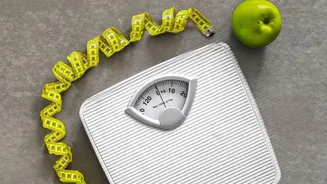
Once you have a clear goal, you need an equally clear way to measure it. The right metric makes your progress tangible. If your only tool is the bathroom scale, you're missing most of the story. For a goal to 'build strength,' appropriate metrics would be the amount of weight lifted, the number of repetitions completed, or progressing to a more challenging exercise. For an endurance goal like 'running a 10K,' you should track your distance covered and your pace per kilometre. If your goal is to 'improve flexibility,' measure your range of motion with something like a sit-and-reach test. Even subjective goals like 'increasing energy' can be measured by rating your energy level on a scale of 1 to 10 each day or tracking the number of workouts you complete without feeling exhausted.
Choosing Your Tracking Toolkit
The tools you use to measure progress should be simple enough that you'll use them consistently. A classic exercise journal is a powerful and low-tech option, allowing you to note the date, exercises performed, weights, sets, and reps. This creates a detailed log you can look back on to see how far you've come. For those who prefer a modern approach, fitness tracking apps and smartwatches can automatically log workouts, heart rate, distance, and more. Many apps also provide charts and graphs to help you visualise your progress over time. Other useful, non-digital tools include taking monthly progress photos (in the same lighting and pose) and using a measuring tape to track changes in muscle size or waist circumference. The key is to choose a method that feels sustainable, not obsessive.
Review, Reflect, and Readjust
Tracking data is pointless without reviewing it. Set a consistent time to check in on your progress, whether it's weekly or monthly. Progress is rarely a straight line; there will be fluctuations and plateaus. Use your tracked data to identify what’s working and what isn’t. If your strength gains have stalled, your log might show it's time to increase the weight or change your routine. If your running pace isn't improving, you might need to incorporate different types of runs. This process of review and adjustment turns your fitness plan into a dynamic system that evolves with you. It helps you set realistic milestones and ensures you are always moving forward, even if the pace changes.