



Visa and Connectivity Updates for 2026
Getting to Uzbekistan has become significantly easier for Indian travellers. In a major move to boost tourism, Uzbekistan announced a 30-day visa-free entry policy for Indian citizens in August 2026. While travellers should confirm the official start
date before booking, this simplifies travel planning considerably. Previously, a straightforward e-visa process was available for a fee of around $20 USD. In terms of flights, connectivity has also improved. In addition to Uzbekistan Airways, airlines like Centrum Air have been expanding their services, recently launching direct flights from Hyderabad to Tashkent, adding to existing routes from Delhi. This increased competition and direct access make the journey quicker and more accessible. For travel within the country, the high-speed 'Afrosiyob' train is a comfortable and efficient way to connect major cities like Tashkent, Samarkand, and Bukhara.
Tashkent: The Modern Gateway
Most journeys begin in Tashkent, Uzbekistan's modern capital. It's a city of contrasts, where wide, Soviet-era avenues meet traditional mahallas (neighbourhoods) and gleaming new buildings. Don't miss a ride on the Tashkent Metro, where each station is a unique work of art, adorned with chandeliers, mosaics, and intricate carvings. The Chorsu Bazaar is a sensory overload in the best way possible, offering everything from spices and fresh bread to local crafts. For a taste of history, visit the Khast-Imam Complex, which houses ancient religious manuscripts. Tashkent is also home to the Lal Bahadur Shastri Centre for Indian Culture, a testament to the long-standing friendship between the nations. The city is considered very safe for tourists, with a friendly and visible police presence.
Samarkand: The Jewel of the Silk Road
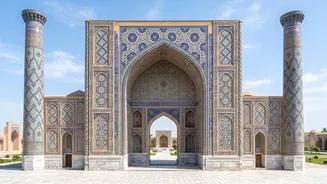
Samarkand is a name that evokes legendary tales of the Silk Road, and it does not disappoint. The city's centrepiece is the majestic Registan Square, a breathtaking ensemble of three grand madrasas (Islamic schools) covered in intricate blue tilework. Seeing it at sunrise or sunset is an unforgettable experience. Other essential visits include the Gur-e-Amir, the mausoleum of the conqueror Timur (Tamerlane), and the Shah-i-Zinda necropolis, a stunning street of mausoleums decorated with some of the richest tilework in the Muslim world. The historical ties to India are profound; Babur, the founder of the Mughal Empire, hailed from this region, and the architectural influence is visible in many Indian monuments.
Bukhara: The Soul of Central Asia
If Samarkand is majestic, Bukhara is intimate and enchanting. Its historic centre is a UNESCO World Heritage site, a labyrinth of narrow alleyways, mosques, and madrasas that feel largely untouched by time. The heart of the old city is the Lyabi-Hauz, a tranquil plaza built around a pool, perfect for sipping tea and people-watching. Key sights include the towering Kalyan Minaret, which once guided caravans across the desert, the Ark Fortress, and the unique Chor Minor madrasa. Many old madrasas and caravanserai have been converted into charming boutique hotels and craft shops, making it the best city for souvenir hunting.
Khiva: A Living Museum
Located further west in the desert, Khiva requires a bit more effort to reach but offers a unique reward. The city's inner fortress, Itchan-Kala, is a perfectly preserved walled city that feels like stepping onto a movie set. With over 50 historical monuments and 250 old houses, you can spend a full day wandering its sandy alleys, climbing minarets for panoramic views, and imagining life in a medieval Central Asian oasis. Getting to Khiva typically involves a 6-7 hour train journey from Bukhara or a flight from Tashkent to the nearby city of Urgench. It's an essential stop for those who want to experience the full breadth of Uzbekistan's Silk Road history.
Culture, Cuisine and Practical Tips
Indian travellers often feel a surprising sense of familiarity in Uzbekistan. Decades of love for Bollywood films mean you might be greeted with names like Raj Kapoor or Shah Rukh Khan. The shared linguistic roots between Hindi and Uzbek also create an easy connection. The national dish, plov (a rice pilaf with meat and vegetables), will remind many of biryani, though each region has its own distinct version. While the country is very safe for travellers, including solo women, it's respectful to dress modestly, especially when visiting religious sites. Also, be mindful of local regulations regarding medicines; it's wise to carry a doctor's prescription for any necessary medication and declare it upon arrival.