







From Niche Innovator to Global Aspirant
For years, Ultraviolette has been a name synonymous with high-end, performance-oriented electric motorcycles in India, particularly with its flagship F77 model. The company carved out a niche by focusing on aviation-inspired design and deep-tech engineering,
developing its own battery packs, chassis, and software. Unlike many players in the crowded electric scooter market, Ultraviolette aimed for the enthusiast, the rider who craves speed and style, but in an electric package. This focus on proprietary technology and a premium experience has now become the springboard for a much larger ambition: taking its Indian-engineered bikes to the world.
The Blueprint for a Massive Scale-Up
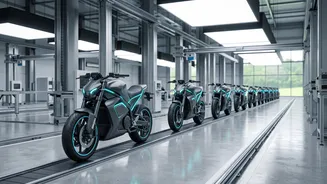
The company’s global plans are backed by a significant manufacturing expansion. In a landmark move, Ultraviolette has announced its new ‘BIGGA (Big Global Ambition) Factory’ in Hosur, Tamil Nadu. This facility is a quantum leap from its current Bengaluru plant, which has a production capacity of around 10,000-15,000 units annually. The new factory will see a phased ramp-up to an initial capacity of 250,000 units per year, with the infrastructure designed to eventually scale up to a staggering 500,000 vehicles annually. This expansion is being financed by a recent $85 million funding round, underscoring investor confidence in the company's growth trajectory.
Targeting the World's Toughest Markets
Ultraviolette is not testing the waters with small, emerging markets. It is diving straight into some of the most competitive automotive arenas in the world. The company has already established a presence in nearly 20 European nations, including key markets like Germany, France, Spain, Italy, and the UK, and recently expanded into Central and Eastern Europe. The most significant target on the horizon is the United States, with a planned market entry in 2027. Expansion into Latin America and Southeast Asia is also part of the strategy. This isn't just about shipping bikes; it involves building distribution networks, meeting stringent regulatory standards, and creating a brand from scratch in regions dominated by legacy players. The company aims for international sales to eventually contribute 30-35% of its total revenue, a clear sign that this is a core part of its business model.
More Than Just the F77
While the flagship F77 is leading the charge into Europe, the massive new production capacity is also being built to accommodate a wider product portfolio. The company is gearing up to launch new models designed to appeal to different segments of the market. These include the much-anticipated Tesseract electric scooter, which will take Ultraviolette into the high-volume scooter category for the first time. Also in the pipeline are models like the X-47 crossover and the Shockwave enduro motorcycle. This product diversification is crucial for achieving the volumes that the new factory is being built for and will allow the company to compete across multiple fronts, both in India and abroad.
A 'Make in India' Story on the Global Stage
Ultraviolette's expansion is more than just a corporate growth story; it is a powerful statement for India's manufacturing and technology sectors. The company's insistence on designing and engineering its core technology in-house is a key differentiator. As co-founder and CEO Narayan Subramaniam has emphasized, the goal is to build a global brand rooted in deep engineering, not just to chase volumes. The export of these high-performance machines is being viewed as a significant moment for the 'Make in India' initiative, demonstrating that Indian companies can compete on a global stage not just on cost, but on technology, design, and performance. As it gears up for this new chapter, Ultraviolette is not just selling motorcycles; it is exporting Indian innovation.