

Meet NASA's New Dust Detective
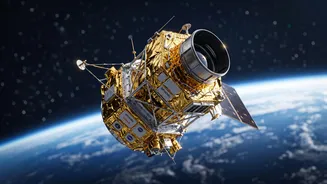
NASA is funding a specialized space telescope mission called PUFFINS, designed to get a much closer look at the interstellar medium—the seemingly empty space between stars. The mission, with a budget of $20 million, is part of the agency's Astrophysics
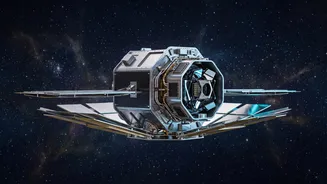
Pioneers program, which focuses on small-scale, high-impact science. PUFFINS stands for 'Polarimetry in the Ultraviolet to Find Features in INterStellar dust'. Led by Principal Investigator Dr. Ramya Anche of the University of Arizona, the mission will use a SmallSat, or small satellite, equipped with a 10-inch telescope. Its goal is to observe the ultraviolet light from approximately 70 different stars to understand how that light is affected by the dust it passes through on its way to us. Scheduled for launch in 2030, PUFFINS will provide a wealth of new data on particles that are foundational to the creation of everything we see in the night sky.
Why Cosmic Dust Punches Above Its Weight
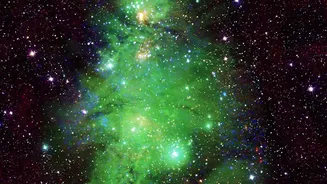
It might sound insignificant, but cosmic dust is one of the most important ingredients for building a universe. While the cosmos is mostly hydrogen and helium gas, the tiny fraction of matter that is dust plays a vital role. These particles, often smaller than 50 nanometers (about the size of a virus), are formed in the cooling atmospheres of stars and scattered through space. These grains of silicates, carbon, and other elements act as cosmic gathering points. In the cold, diffuse clouds between stars, individual atoms struggle to find each other. Dust particles provide a surface where atoms can meet, stick together, and form the molecules necessary for star formation. They also act as shields, protecting these fragile stellar nurseries from the destructive radiation of nearby stars. Over millions of years, these dust grains clump together, growing from microscopic particles into pebbles, boulders, and eventually, the rocky planets like Earth.
A New Eye on the Ultraviolet Sky
PUFFINS's main technique involves a method that hasn't been used from space in nearly three decades: ultraviolet spectropolarimetry. It works by measuring a property of light called polarization. As starlight travels through clouds of interstellar dust, some of the dust grains align with the galaxy's magnetic field, acting like microscopic compass needles. This alignment leaves a faint but measurable fingerprint on the starlight, altering its polarization. By analyzing this polarized UV light, scientists can deduce the size, shape, and composition of the dust grains—details that are almost impossible to see with conventional optical or infrared telescopes. The mission will observe stars in a variety of cosmic environments, from nearby stellar nurseries to the Magellanic Clouds, our galactic neighbors, to build a comprehensive map of how dust behaves across the galaxy.
Solving a Decades-Old Mystery
Previous missions in the early 1990s provided a tantalizing but incomplete picture, observing only about 30 stars with this technique. PUFFINS aims to at least triple that number, providing a much larger and more diverse dataset to tackle longstanding questions. One key mystery is why the ultraviolet polarization from some stars is much stronger than theories predict. Understanding this anomaly could rewrite our models of dust grain physics. Another puzzle is the '2175 Angstrom feature', a well-known dip in starlight absorption caused by dust, which strangely shows no polarization. Answering these questions will provide crucial insights into how dust interacts with its environment, regulates temperatures in the galaxy, and drives chemical evolution. Ultimately, the data from PUFFINS will not only stand on its own but also serve as a vital stepping stone, helping to inform the design of future flagship missions like NASA's proposed Habitable Worlds Observatory.