







More Than Just a New Factory
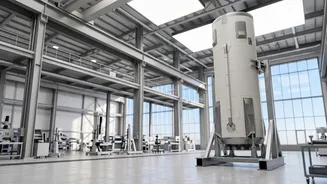
On September 8, 2026, Agnikul Cosmos inaugurated two specialised centres at its Chennai headquarters: the Stage Testing & Inspection Facility (STIF) and the Pressurant Tank Realisation, Over-wrapping and Outfitting Facility (PROOF). These facilities are
crucial for the company's next big goal: developing fully reusable rockets. STIF allows engineers to test entire rocket stages in conditions that mimic an actual flight and, more importantly, to inspect and requalify stages that have been recovered after a launch. PROOF brings the manufacturing of critical high-pressure vessels in-house, reducing reliance on external suppliers and speeding up production. This vertical integration gives Agnikul end-to-end control over the entire lifecycle of its rocket components, a key advantage in the high-stakes space industry.
The Holy Grail of Rocketry: Reusability
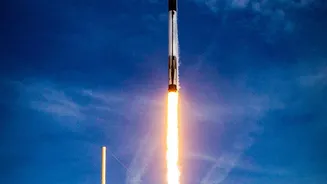
For decades, rockets were a 'use and throw' technology. Imagine flying from Mumbai to Delhi on a plane, and then discarding the aircraft after one trip. That's how space launches have traditionally worked, making them incredibly expensive. Reusable rockets change that equation entirely. By designing rockets whose most expensive parts (the engines and booster stages) can fly back to Earth, land safely, and be refurbished for another mission, companies can slash the cost of accessing space by up to 80%. This shift, pioneered by global players like SpaceX, transforms space launch from a niche, costly endeavour into a more routine transportation model, much like commercial aviation. Lower costs and higher launch frequency are foundational to the modern commercial space economy, enabling large satellite constellations, deep-space missions, and more.
A Major Leap for 'Make in India' in Space
Agnikul's new infrastructure is a major win for India’s 'Atmanirbhar' (self-reliant) mission in space. The Indian government has actively been fostering a private space ecosystem, aiming to grow the country's share of the global space economy from its current 2-3% to over 8% by 2030. The space economy in India is projected to grow from around $8.4 billion to over $40 billion by the next decade. Companies like Agnikul are at the heart of this strategy. By developing cutting-edge, cost-effective launch solutions domestically, they not only reduce India's dependence on foreign launch providers but also position the country as a competitive hub for launching small satellites for global customers. The new facilities make Agnikul the only private Indian company with in-house infrastructure to requalify rocket stages after flight, a crucial capability for reusability.
Agnikul's Journey and the Road Ahead
This development is the logical next step for a company that has already achieved significant milestones. Incubated at IIT Madras, Agnikul made headlines on May 30, 2024, with the successful launch of its Agnibaan SOrTeD (SubOrbital Technological Demonstrator). That mission was notable for several firsts, including being powered by the world's first single-piece 3D-printed semi-cryogenic engine. The ability to 3D print complex engines already reduces manufacturing costs and time. Now, with the new testing facilities, Agnikul is preparing for its second major mission and getting closer to orbital launches. The ultimate vision is a fully reusable launch vehicle that can offer on-demand, affordable access to space for the booming small satellite market. While challenges remain, these new facilities are a concrete step towards turning that vision into a commercial reality.