
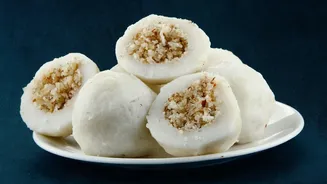
The Unmistakable Modak
The modak is more than just a sweet; it is an integral part of festivals and celebrations, most notably Ganesh Chaturthi. Believed to be a favourite of Lord Ganesha, these delicate dumplings are a staple offering. The most popular version, Ukadiche Modak,
features an outer casing made from steamed rice flour, meticulously pleated by hand. Inside, a sweet, aromatic filling of fresh grated coconut and jaggery, often spiced with cardamom or nutmeg, awaits. The entire dumpling is then steamed, resulting in a soft, melt-in-your-mouth texture that is both comforting and celebratory. While fried versions also exist, it is the steamed modak's distinct shape that is iconic.
Meet Japan's Culinary Cousin
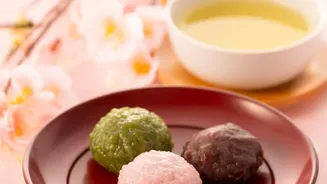
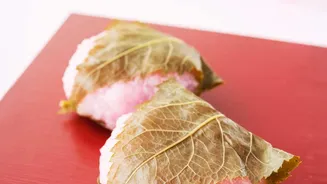
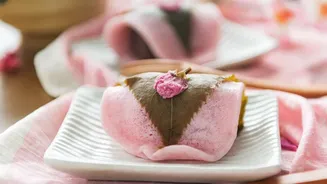
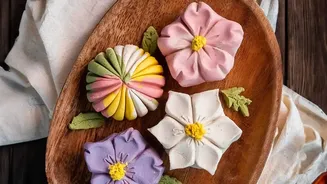
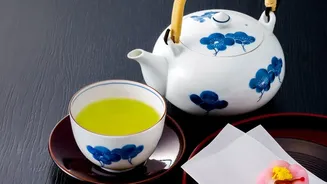
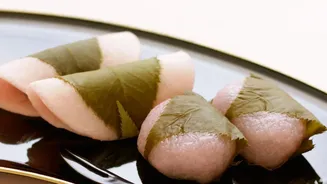
Halfway across the world, a Japanese confectionery, or 'wagashi', has been making waves for its striking resemblance to the modak. The sweet in question is often a type of 'uirō' or 'namagashi', traditional Japanese cakes made from rice flour, sugar, and water. Wagashi are an art form in Japan, known for their exquisite designs that often reflect the changing seasons or elements of nature. These confections are not typically associated with religious offerings in the same way as modak, but are enjoyed as part of tea ceremonies or as a seasonal treat. While some Japanese sweets have ancient connections to deities—like Kangidan, a fried sweet offered to the deity Kangiten, who is considered a Japanese form of Ganesha—the modak-like sweets gaining attention now are often modern artistic creations from local sweet shops, particularly noted in cities like Nagoya.
A Tale of Two Fillings
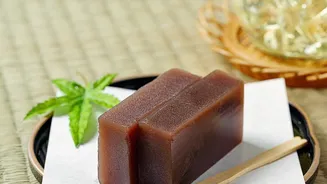
The most significant difference lies inside. While a modak bursts with the flavour of coconut and jaggery, its Japanese lookalike is typically filled with 'anko', a sweet red bean paste made from azuki beans. Anko is a cornerstone of Japanese sweets, providing a smooth, earthy sweetness that contrasts with the chewy outer layer. The outer shells are also similar yet distinct. Both use a rice flour base, but the preparation method differs. Modak dough is kneaded and steamed, while uirō involves steaming a more liquid batter of rice flour and sugar, giving it a uniquely chewy and jelly-like consistency.
More Than a Sweet Coincidence
How did two cultures, thousands of miles apart, develop such a similar-looking delicacy? The answer lies in shared agricultural staples and the universal language of food. Rice flour is a fundamental ingredient in many Asian cuisines, serving as a versatile and gluten-free base for everything from noodles to desserts. The concept of a steamed or boiled dumpling with a sweet filling is not unique to India or Japan. Similar treats can be found across Asia, from Nepal's Yamari to China's Tangyuan and the Philippines' Paowaw. Each culture adapts the basic form using local ingredients and flavours, resulting in these fascinating culinary parallels. The pleated shape itself is a practical solution for sealing a filling inside a soft dough, a technique that artisans in both countries perfected independently.