



Mahabalipuram: Rock-Cut Dravidian Origins
On the coast of the Bay of Bengal lies Mahabalipuram, a testament to the artistic vision of the Pallava dynasty in the 7th and 8th centuries. This UNESCO World Heritage site is an open-air museum of early Dravidian architecture. Here, you'll find monolithic
temples carved from single granite boulders, known as Rathas (chariots), and intricate rock-cut cave temples. The iconic Shore Temple, standing against the sea, is one of the oldest structural stone temples in South India, showcasing the transition from rock-cut to free-standing structures.
Hampi: The Grandeur of a Fallen Empire
The ruins of Hampi are the ghost of the formidable Vijayanagara Empire, which flourished between the 14th and 16th centuries. Spread across a dramatic landscape of giant boulders, the site features a unique blend of Hindu and Islamic architectural elements. The Virupaksha Temple remains an active place of worship, while the Vittala Temple complex is famed for its stone chariot and incredible musical pillars, which resonate with musical notes when tapped. These structures reflect a period of immense wealth and cultural fusion.
Fatehpur Sikri: Akbar's Red Sandstone Dream
For a brief period, from 1571 to 1585, Fatehpur Sikri served as the capital of the Mughal Empire under Emperor Akbar. Built almost entirely from red sandstone, the city is a stunning example of Indo-Islamic architecture, blending Persian, Timurid, and Indian styles. Key structures like the Buland Darwaza, a monumental victory arch, and the Jama Masjid demonstrate Mughal grandeur. The palace complex reveals Akbar's syncretic vision, with buildings that catered to his interests in art and different religions.
Shekhawati: The Open-Air Art Gallery
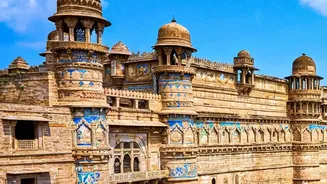
The Shekhawati region in Rajasthan is not famous for grand forts but for its opulent havelis, built by wealthy merchants in the 18th and 19th centuries. What makes these mansions unique are the elaborate frescoes covering their walls, earning the region the nickname of an 'open-air art gallery'. The paintings depict a wide range of subjects, from mythology and daily life to the arrival of the British and their inventions, like trains and cars. The architecture itself, with its grand courtyards and intricately carved wooden doors, is a fusion of Rajput and Mughal styles.
Pondicherry: A Slice of French Colonial Life
A walk through the French Quarter (or White Town) of Pondicherry is like stepping into a different country. Established as a French settlement in 1674, the town's colonial heritage is beautifully preserved in its architecture. You'll find mustard-yellow and pastel-coloured villas with high ceilings, arched windows, and wrought-iron balconies lining planned, grid-like streets. Buildings like the French Consulate and the Église de Notre-Dame des Anges showcase a distinct Neoclassical and French Gothic style, offering a unique coastal European vibe.
Kolkata: The Jewel of the British Raj
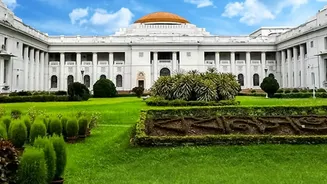
As the former capital of British India, Kolkata is a treasure trove of colonial architecture. The city is filled with imposing structures that reflect the power and ambition of the British Empire. The Victoria Memorial, built from white Makrana marble, is a stunning example of the Indo-Saracenic style, blending British and Mughal elements. Other landmarks like the Writers' Building, the General Post Office, and St. Paul's Cathedral showcase Neoclassical and Gothic Revival styles, defining the cityscape as the 'City of Palaces'.
Chandigarh: India's Modernist Experiment
Representing a complete break from the past, Chandigarh was designed by the Swiss-French architect Le Corbusier in the 1950s as a symbol of a newly independent India. It is a masterpiece of 20th-century modernist architecture and urban planning. The city is organized on a grid system with self-contained sectors. The Capitol Complex, a UNESCO World Heritage Site, features monumental concrete buildings like the High Court, the Secretariat, and the Palace of Assembly. Its raw concrete forms and human-centric design philosophy were revolutionary for their time.