



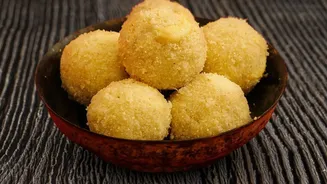
The Soul of Simplicity
Across the diverse culinary landscape of India, from the 'pithas' of the North East to the 'appams' of the South, a classic trio of ingredients consistently appears in beloved sweets: rice flour, coconut, and jaggery. This combination is no accident.
It’s a reflection of regional agriculture and a time-honoured understanding of flavour. Rice provides a neutral, slightly sweet, and wonderfully textured base, coconut offers richness and moisture, and jaggery imparts a deep, caramel-like sweetness that refined sugar simply cannot match. These sweet pancakes, often called 'meetha cheela', are the simplest expression of this trio. They are a comforting snack, a quick breakfast, or a light dessert that delivers complex flavour from the most basic of pantries. Their history is tied to the very roots of Indian sweets, many of which originated as temple offerings made from these fundamental ingredients.
Getting Your Core Ingredients Right
The beauty of this recipe lies in its minimalism, which means the quality of each component shines through. For the rice flour, you can use a fine, store-bought variety for convenience. However, for a truly superior texture, soaking raw rice for a few hours and grinding it into a smooth batter yields a softer, more flavourful pancake. When it comes to jaggery, look for a dark, rich-coloured block or powder. This indicates a deeper, more molasses-like flavour. It's best to melt the jaggery with a little water and strain it through a sieve to remove any impurities before adding it to the batter. For the coconut, freshly grated is always superior, providing moisture and a fragrant aroma that desiccated coconut cannot fully replicate. If you only have desiccated coconut, soaking it in a little warm water for a few minutes can help rehydrate it.
The Secret to a Perfect Batter
Creating the batter is a simple process, but getting the consistency right is key. In a mixing bowl, combine your rice flour with the strained jaggery syrup and freshly grated coconut. Whisk everything together, adding water a little at a time until you reach a smooth, pourable consistency, similar to that of a standard dosa or crepe batter. It should not be too thick, as this will result in dense, heavy pancakes, nor too thin, which will make them difficult to flip. Many traditional recipes call for letting the batter rest for at least 15 to 30 minutes. This step is crucial as it allows the rice flour to fully absorb the liquid, resulting in a smoother texture and preventing the pancakes from becoming tough. This resting period lets the flavours meld and ensures a more tender final product.
Cooking Your Pancakes to Perfection
To cook the pancakes, heat a non-stick or well-seasoned cast-iron pan over medium-low heat. Cooking them slowly is important; if the heat is too high, the jaggery will cause the outside to burn before the inside is fully cooked. Lightly grease the pan with a touch of ghee. The nutty aroma of ghee complements the jaggery and coconut beautifully. Once the pan is hot, pour a ladleful of batter into the center and gently spread it into a circle. Don't make them too large, as smaller pancakes are easier to handle. Cook for a couple of minutes until you see small bubbles appearing on the surface and the edges begin to look set. Carefully flip the pancake and cook for another minute or two on the other side until it's golden brown. The resulting pancake should be soft with slightly crispy edges.
Variations and Serving Ideas
While the simple three-ingredient pancake is delicious on its own, it also serves as a wonderful canvas for other flavours. A pinch of ground cardamom or a teaspoon of fennel seeds (saunf) added to the batter can provide a lovely aromatic warmth. Some variations also include adding a ripe mashed banana to the batter for extra sweetness and softness. For serving, these pancakes need very little adornment. They are delightful served warm, straight from the pan, perhaps with a small dollop of fresh white butter or an extra drizzle of ghee. They can also be served with a side of sweetened coconut milk for dipping, enhancing the coconut flavour and adding another layer of richness. Enjoy them with a cup of hot tea or coffee for a perfect evening snack.