




From Disposable to Reusable
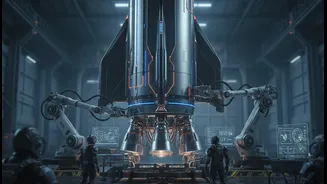
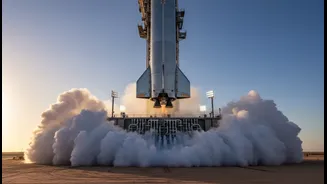
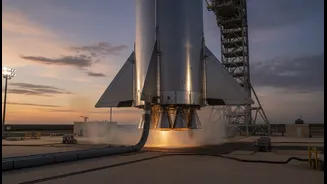
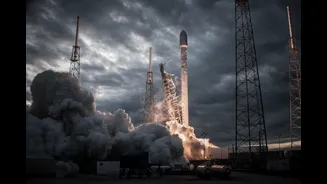
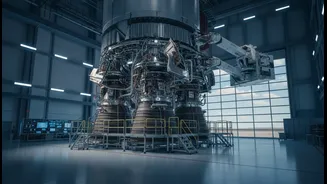
For most of spaceflight history, launching anything into orbit was an incredibly wasteful and expensive endeavor. Rockets were built for a single mission and then discarded, their expensive components burning up in the atmosphere or falling into the ocean.
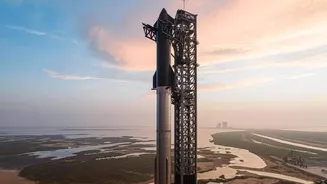
Imagine throwing away an entire airplane after just one flight; that was the economic reality of space access. This model made space exploration and commercialisation prohibitively expensive for all but the most well-funded governments and corporations. The shift towards reusability, pioneered most visibly by companies like SpaceX, represents a fundamental change in the economics of space. By designing the most expensive part of the rocket—the first-stage booster—to be recovered and flown again, the cost per launch can be dramatically reduced.
A Controlled Fall From Space
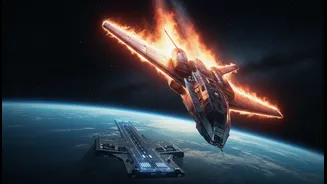
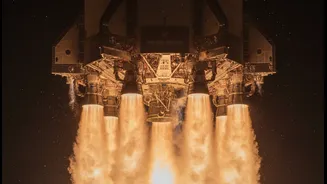
The journey back to Earth is a violent and complex ballet of physics and engineering. After separating from the second stage, which carries the payload into orbit, the booster is traveling at hypersonic speeds. Its first move is to reorient itself using small thrusters for the trip back into the atmosphere. A series of engine burns are required. The first, a "boostback burn," can be used to reverse the booster's direction and send it back towards the launch site. As it plummets back through the atmosphere, a "re-entry burn" is initiated to slow the vehicle down and protect it from the intense heat generated by air resistance. Without this burn, the booster would be destroyed.
Steering with Grid Fins
One of the most critical technologies for a successful landing are the grid fins. These are four waffle-patterned fins at the top of the booster that deploy during descent. Acting much like the arms of a skydiver, these aerodynamic surfaces allow the rocket to be steered with incredible precision as it falls through the atmosphere. The onboard flight computer uses these fins to control the booster's orientation and guide it towards its landing target, whether that's a concrete pad on land or a floating platform in the ocean. Made from materials like titanium, they must withstand extreme temperatures and forces to maintain control as the booster transitions from hypersonic to supersonic, and finally to subsonic speeds.
Sticking the Landing
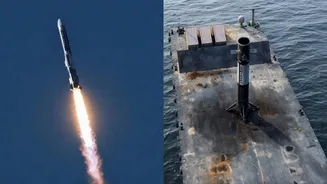
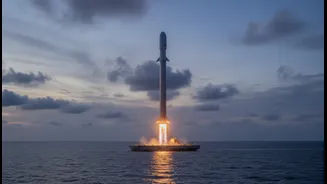
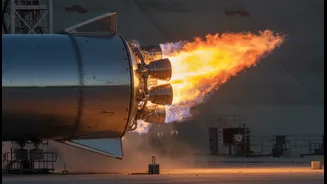
The final phase of the descent is the landing burn. In the last moments before touchdown, one or more of the booster's main engines relight to rapidly decelerate the vehicle from terminal velocity to a gentle landing. The rocket's four deployable landing legs extend, and the engine's thrust is precisely modulated to bring the booster to a near-zero velocity just as it touches the ground. This requires an astonishing level of accuracy, landing a 14-story structure on a designated spot that, in the case of an ocean landing, is a moving target. These autonomous spaceport drone ships can hold their position in the ocean with remarkable precision, waiting to catch the returning booster hundreds of kilometers from shore. A recent development from China saw the recovery of a booster using a giant net on a ship, an alternative method that eliminates the need for heavy landing legs on the rocket itself.
Why Recovery Is a Game-Changer
The ability to safely recover and reuse rocket boosters is not just a technical marvel; it's an economic revolution. Spreading the manufacturing cost of a booster over multiple flights drastically lowers the price of accessing space. This has opened the door for a new era of commercial activity, from the deployment of large satellite internet constellations to the prospect of space tourism. Furthermore, reusability has a significant environmental benefit, reducing the amount of space debris left in orbit and manufacturing waste on the ground. As companies gain experience with each flight, they are able to inspect the hardware, analyze data, and make iterative improvements, potentially increasing the overall safety and reliability of spaceflight.