




Why Rain Can Be Too Much of a Good Thing
While rain is essential for plant life, an excess can be deadly in a container setting. When soil becomes completely saturated with water, the tiny air pockets that roots rely on for oxygen disappear. This anaerobic condition essentially suffocates the roots,
preventing them from absorbing nutrients and water, which ironically causes the plant to wilt even when the soil is wet. This state, known as waterlogging, quickly leads to root rot, a fungal disease that turns healthy white roots into a brown, mushy mess. You might also notice a sour or musty smell coming from the soil, a clear sign that harmful bacteria are taking over.
Reading the Signs: Is Your Plant Drowning?
Plants give clear signals when they are suffering from too much water. The most common sign is the yellowing of lower leaves, which may feel soft or limp. Unlike underwatering where leaves become crispy, overwatered leaves are often soft and droopy. Other signs include stunted growth, leaf drop, and the appearance of fungus or algae on the soil's surface. A definitive way to check is to feel the soil; if it remains soggy for days after rain and pulls away from the pot's edges, your plant is in distress. Gently tipping the plant out of its pot to inspect the roots can confirm your suspicion. Healthy roots are firm and white, whereas rotten roots will be dark brown or black and fall apart easily.
Prevention Is Key: Building a Flood-Proof Foundation
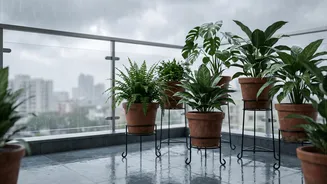
The best way to combat waterlogging is to prepare your pots before the monsoon arrives. Start with the right potting mix. Avoid using dense garden soil alone, as it compacts easily and retains too much water. Instead, use a lightweight, well-draining potting mix. A good mixture often includes cocopeat for moisture retention without sogginess, compost for nutrients, and perlite or vermiculite to improve aeration and drainage. Ensure every pot has adequate drainage holes at the bottom; if they are blocked, clear them out. Elevating your pots using plant stands, pot feet, or even simple bricks creates an air gap underneath, allowing excess water to escape freely and preventing them from sitting in puddles.
Emergency Rescue for Waterlogged Plants
If you find a plant already sitting in waterlogged soil, you need to act fast. First, move the plant to a sheltered spot away from further rain. Gently tilt the pot to help excess water drain out. If possible, carefully remove the plant from its pot to inspect the roots. Trim away any black, mushy, or foul-smelling roots with a clean pair of scissors. Allow the root ball to air dry for a few hours in a shady spot before repotting it with fresh, well-draining soil in a clean pot. After this rescue operation, avoid watering until the top few inches of the new soil feel dry to the touch, giving the recovering roots time to heal.
Smart Habits for a Thriving Monsoon Garden
Managing a balcony garden during the rains involves adapting your routine. During the monsoon, you must adjust your watering schedule; the rain will do much of the work for you. Always check the soil moisture an inch or two deep before even thinking about watering. After a heavy downpour, gently poke the top layer of soil with a small tool to loosen it, which helps with aeration. To prevent fungal infections, which are common in humid weather, you can periodically spray a natural fungicide like neem oil solution. Pruning away dead or yellowing leaves also improves air circulation around the plant, further reducing the risk of disease.