


The Classic Southwest Monsoon
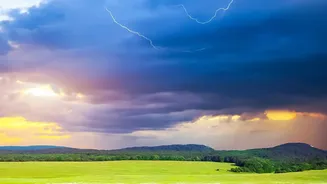
Traditionally, the North American Monsoon is a relatively local affair. As the continent heats up in late spring and summer, a seasonal shift in wind patterns occurs. The prevailing dry, westerly winds give way to more southerly flows that pull in moisture
from the nearby Gulf of California and the eastern Pacific Ocean. This process delivers a significant portion of the annual rainfall for states like Arizona and New Mexico, replenishing reservoirs and providing a brief, green respite from the oppressive summer heat. This pattern is crucial, not just for drinking water but for everything from agriculture to tempering the wildfire season.
A Shift to Distant Sources
The headline refers to a complex shift in atmospheric dynamics. Rather than just relying on nearby oceans, the Southwest's precipitation is becoming more influenced by moisture traveling thousands of miles. This includes “atmospheric rivers,” which are long, narrow corridors of concentrated water vapor that act like rivers in the sky. These systems can transport immense amounts of moisture from the tropics, sometimes equivalent to more than double the flow of the Amazon River. While California has long been familiar with the “Pineapple Express” variety of atmospheric rivers, these and other long-distance moisture transport systems are playing a more significant role across the entire Southwest, a region already grappling with historic drought.
What's Driving the Change?
This growing dependence on distant moisture isn't happening in a vacuum. It's deeply connected to global climate change. Rising global temperatures alter large-scale atmospheric circulation patterns. For the Southwest, this has meant that some of the reliable, local weather patterns that bring rain are becoming less frequent. At the same time, a warmer atmosphere can hold more moisture, potentially making atmospheric rivers stronger and wider when they do form. Research has shown that warming ocean waters, particularly in the Pacific, can change pressure systems in a way that steers these moisture plumes, or fails to generate the local ones, altering who gets rain and who stays dry.
Boom or Bust Rainfall
This shift creates a volatile “boom or bust” cycle. While atmospheric rivers can deliver beneficial rain and snow, vital for replenishing the snowpack that feeds rivers like the Colorado, they can also be destructive. Because they are so concentrated, they can dump extreme amounts of precipitation in a short period, leading to catastrophic flooding and mudslides, especially on fire-scarred landscapes. Conversely, if these long-haul moisture systems fail to arrive, the region is left even drier than before, as the traditional, more gentle sources of rainfall become less reliable. This makes water management incredibly difficult in a region where every drop is already counted.
An Uncertain Water Future
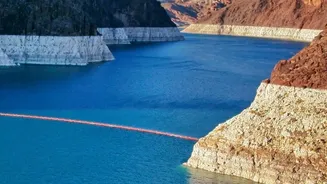
For a region deep in a multi-decade megadrought, this added layer of uncertainty is a serious challenge. Water managers for massive reservoirs like Lake Mead and Lake Powell, which supply water to 40 million people, can no longer rely solely on historical patterns. The entire system is becoming more sensitive to fluctuations in far-flung parts of the Pacific and Atlantic. Studies show the base state of the Southwest is simply becoming drier, meaning that when droughts occur, they are more severe. The increasing reliance on these powerful but unpredictable atmospheric events adds another layer of risk to the water security of major cities from Los Angeles to Phoenix and vast agricultural areas.