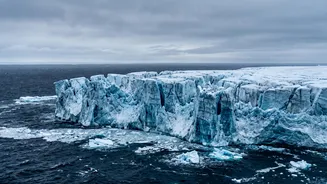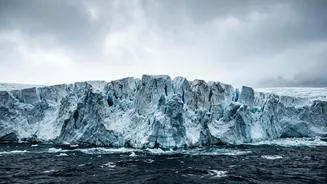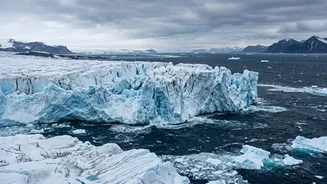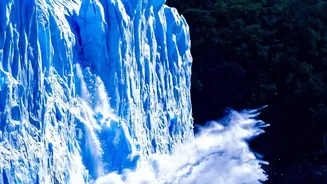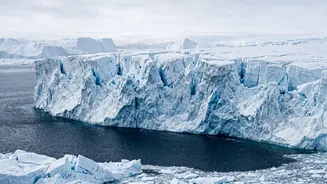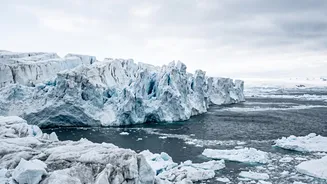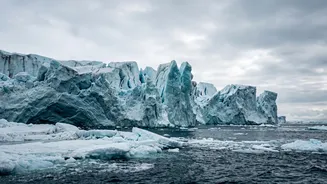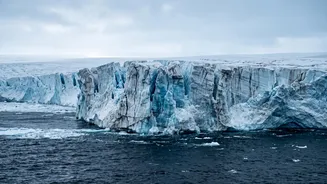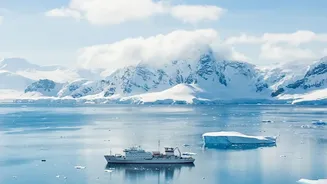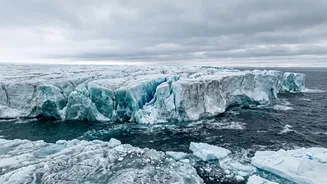


In the farthest reaches of West Antarctica lies a colossal river of ice nicknamed the 'Doomsday Glacier'. New scientific models have delivered a sobering forecast: it's melting far more aggressively than we knew, with alarming implications for our planet.
The Glacier That Haunts Scientists
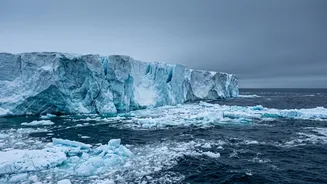
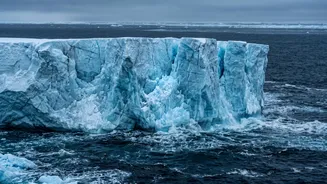
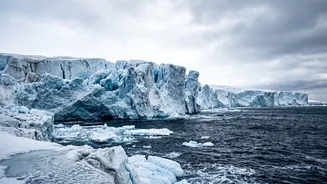
Thwaites Glacier is one of the largest and fastest-changing glaciers in the world. Roughly the size of Great Britain, its sheer scale is difficult to comprehend. For decades, scientists have watched it with growing concern because it acts like a giant natural cork, holding back the rest of the massive West Antarctic Ice Sheet. If Thwaites were to collapse entirely on its own, it holds enough ice to raise global sea levels by more than two feet (65 cm). But the real fear is the domino effect: its failure could destabilise neighbouring glaciers, potentially leading to an eventual sea-level rise of around 10 feet. It currently contributes about 4% of all global sea-level rise, shedding about 50 billion tons of ice annually.
A Doubled Threat Revealed by New Models
The latest research, published in the journal Nature Communications, presents a grimmer picture. A new computer model developed by glaciologists at the University of California, Irvine, and NASA's Jet Propulsion Laboratory suggests that previous estimates of Thwaites' contribution to sea-level rise were far too conservative. The new projections show that the glacier could contribute up to 30 millimeters (1.2 inches) to global sea levels by the year 2100. This figure is double the amount projected by earlier models. Shockingly, the model predicts this could happen even without any additional global warming beyond what has already occurred, highlighting that a certain amount of future ice loss may already be locked in.
Warm Water's Unseen Assault
The key to this revised forecast lies in understanding a process happening miles beneath the ice. Earlier models treated the 'grounding line'—the point where the glacier lifts off the seabed and begins to float—as a simple, fixed line. However, new satellite data revealed a much more complex and dangerous reality: a 'grounding zone' that can be several kilometres wide. Within this zone, warm, salty ocean water is being flushed deep underneath the glacier with the rhythm of the tides in a process called 'tidal pumping'. This allows the warmer ocean currents to vigorously melt the glacier from its base, something previous models didn't fully account for. This hidden assault is causing the glacier to unmoor from the seabed and retreat faster than ever observed.
Losing Its Grip on the Seafloor
Another critical element is the glacier's connection to underwater ridges that act as stabilising anchors. The new simulations show a 60% probability that Thwaites will become detached from a key landform called the Mouginot Ridge before the end of the century. Losing this anchor point would be like pulling the emergency brake off a train on a downhill slope; the glacier's retreat would likely accelerate rapidly across the downward-sloping seafloor until it hits the next ridge. This unpinning could happen as early as the late 2030s, fundamentally altering projections for coastal communities worldwide within decades.
Why This Matters for India's Coastline
A melting glacier thousands of kilometres away might seem like a distant problem, but its consequences are a direct threat to India's extensive coastline. Rising sea levels will directly impact low-lying coastal cities such as Mumbai, Chennai, and Kolkata, as well as the densely populated delta regions of the Sunderbans and the Mahanadi. An increase in the global sea level, even by inches, dramatically magnifies the risk of coastal flooding, soil and water salinisation, and the destructive power of storm surges during cyclones. These scientific warnings from Antarctica underscore the urgent need for India to enhance its coastal resilience through measures like mangrove restoration, strengthening coastal regulation zones, and developing climate-resilient infrastructure to protect millions of lives and livelihoods.