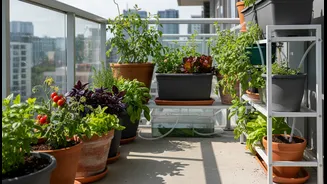










The Urban Canyon Challenge
In a dense urban environment, buildings don't just block wind—they redirect and accelerate it. When wind is forced through the narrow spaces between high-rise towers, it speeds up, creating a phenomenon known as the 'wind tunnel' or 'canyon effect'. This
can turn a gentle city breeze into a fierce, plant-shredding gust on your balcony or rooftop, creating a microclimate that is far harsher than you might expect. These powerful air currents can surprise even seasoned gardeners who are accustomed to more predictable, ground-level conditions.
Signs of Wind Stress on Plants
How can you tell if wind is your garden’s unseen enemy? The symptoms of wind stress are often mistaken for other issues. Watch for tattered, ripped, or browning leaf edges, a condition sometimes called 'wind burn'. Plants may appear wilted even with moist soil because the constant wind causes them to lose moisture through their leaves faster than they can absorb it from their roots. Other tell-tale signs include stunted growth with smaller leaves, broken stems, and a reduced number of flowers or fruit. In persistent wind, plants may close the pores on their leaves to conserve water, which slows their growth significantly.
Solution 1: Choose Wind-Resistant Plants
Fighting a constant gale is exhausting, so the first line of defence is choosing plants that are naturally equipped to handle it. Think tough, not delicate. Look for plants with small, waxy, or leathery leaves that lose less water. Hardy herbs like rosemary and lavender are excellent choices, as are many succulents like sedums and echeverias. Ornamental grasses are another fantastic option; their flexible stems and slender leaves are designed to move with the wind rather than fight it. Avoid plants with large, soft leaves, like many varieties of petunia or tomato, as they are easily shredded by strong gusts.
Solution 2: Create a Sheltered Microclimate
You can't stop the wind, but you can slow it down. The goal is not to create a solid wall, which can cause more damaging turbulence, but to filter and diffuse the wind. Latticed screens, bamboo fencing, or commercial-grade windbreaks made of mesh fabric are highly effective. These barriers allow some air to pass through, reducing the wind's speed without creating a vortex on the other side. Even arranging taller, tougher plants in sturdy pots along the windiest edge of your balcony can create a living windbreak that protects more delicate specimens behind them.
Solution 3: The Right Gear and Setup
In a windy environment, your equipment matters. Opt for heavy, stable pots made of wood, concrete, or thick plastic; unglazed terracotta is light and dries out very quickly, making it a poor choice. Grouping several pots together adds collective weight and stability. Also consider securing taller pots or trellises to the balcony railing to prevent them from tipping over in a severe gust. Since wind wicks moisture away from both leaves and soil, you'll need to adjust your care routine. Water more frequently, and apply a layer of mulch, like pebbles or small river stones, on top of the soil to reduce evaporation and help weigh down the pot.