






Understanding the Advance Reservation Period (ARP)
The single most important rule for booking any long-distance train in India, including the new Vande Bharat sleepers, is the Advance Reservation Period or ARP. As of late 2026, the standard ARP for most Indian Railways services is 60 days. This was a change
from the previous 120-day window, implemented to reduce speculative bookings. This 60-day rule means you can book your ticket up to two months before your travel date. It is crucial to remember that the booking window opens exactly 60 days excluding the date of your journey. For example, if you plan to travel on December 30, the booking for that journey will open at 8:00 AM on October 31. Missing this opening time by even a few minutes can mean the difference between a confirmed berth and a sold-out train, especially on popular routes.
Specific Rules for Vande Bharat Sleepers
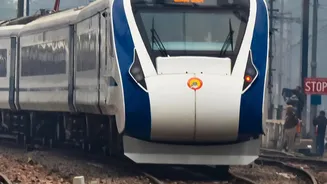
While the 60-day ARP applies to Vande Bharat sleepers, these premium trains come with a stricter set of booking regulations compared to conventional trains. Most notably, Indian Railways has not provided a Tatkal or Premium Tatkal quota for these services. This means there is no option for last-minute booking; all tickets must be reserved in advance through the general quota. Furthermore, the Vande Bharat sleeper trains do not issue Reservation Against Cancellation (RAC) or waitlisted tickets. Only passengers with fully confirmed tickets are permitted to board the train. This policy ensures that every passenger on board has a designated berth, eliminating the uncertainty that comes with waitlisted travel. The fares are also fixed and do not feature the dynamic or surge pricing seen on some other premium services.
How to Book Your Ticket Step-by-Step
Booking a ticket for the Vande Bharat sleeper follows the same process as other trains on the IRCTC platform. You can book online via the official IRCTC website or its 'Rail Connect' mobile app, or offline at a railway station's Passenger Reservation System (PRS) counter. For online booking, you first need to log in to your IRCTC account. It is recommended to have your account ready and, if possible, your passenger details pre-saved in the 'Master List' to speed up the process. On the booking page, enter your departure and destination stations, and select your travel date. From the list of available trains, select the Vande Bharat sleeper and your preferred class (AC First Class, AC 2-Tier, or AC 3-Tier). After filling in the passenger details, you will proceed to the payment page. Using a fast payment method like UPI or an e-wallet is advisable, as the first few minutes after bookings open at 8:00 AM are highly competitive.
A New Benchmark in Overnight Comfort
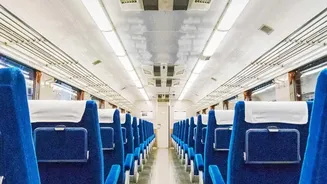
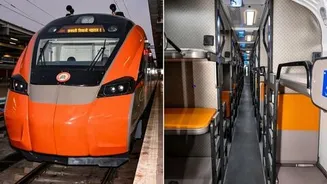
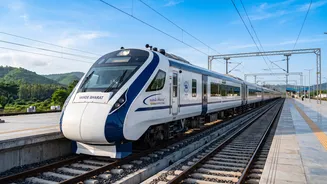
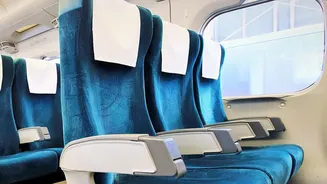
The excitement around the Vande Bharat sleeper is largely due to the significant upgrade in passenger comfort and amenities it promises. Designed for long-haul routes, the train features 16 coaches with a total capacity of 823 passengers, split across three classes. The interiors are designed to be modern and luxurious, with features like sensor-based lighting, fully sealed gangways for smooth movement between coaches, and advanced fire safety systems. The berths themselves are ergonomically designed for better comfort, and ladders for accessing upper berths have been made more user-friendly. Washrooms are a major focus, featuring odour-free, bio-vacuum toilets similar to those in aircraft. For convenience, each berth area includes multiple charging options, including standard plug points and USB ports. Enhanced security with CCTV cameras and improved ride quality with minimal jerks aim to make the overnight journey a premium experience.
Inaugural Routes and Future Expansion
As of late 2026, Vande Bharat sleeper services have been launched on key long-distance routes, including Howrah-Guwahati, Delhi-Varanasi, and Mumbai-Bengaluru. The introduction of these trains on high-demand corridors signals a strategic move to offer a competitive alternative to both existing premium trains and short-haul flights. The Howrah-Kamakhya (Guwahati) service, for instance, connects Eastern India with the Northeast, a vital corridor for thousands of daily travelers. Indian Railways plans to continue expanding the network, with more rakes scheduled for production. The overall vision is to scale up the fleet significantly in the coming years, making this new standard of overnight travel accessible on more routes across the country.