




Our Galaxy's Quiet Heart
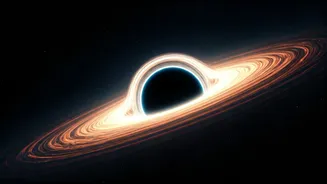
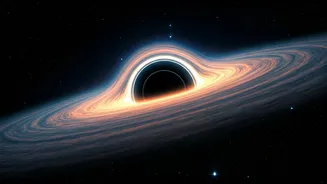
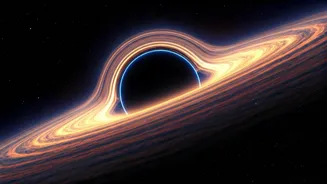
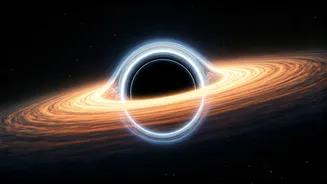
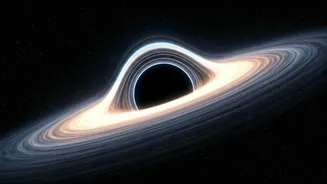
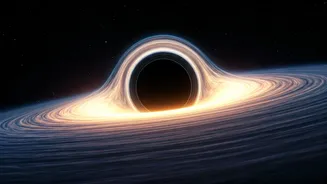
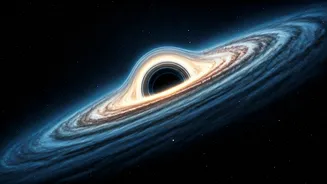
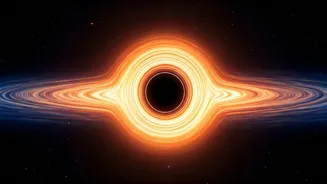
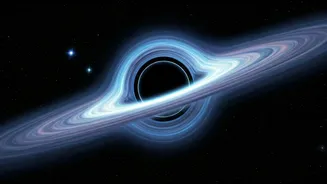
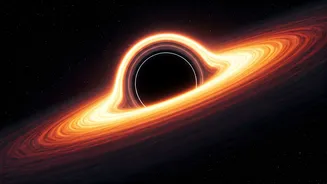
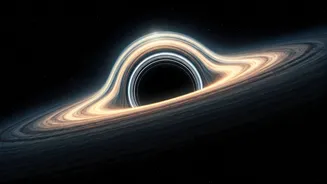
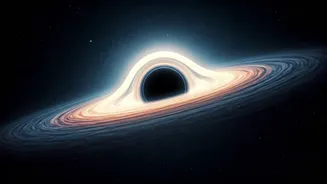
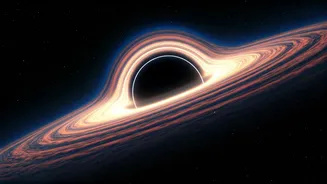
At the center of our Milky Way galaxy, about 26,000 light-years from Earth, sits Sagittarius A, or Sgr A for short. It’s a supermassive black hole with the mass of four million suns. For a cosmic monster of its size, Sgr A is surprisingly quiet. Unlike
the hyperactive black holes at the centers of other galaxies, which gorge on matter and blast out spectacular jets of energy, ours is a relatively gentle giant. Astronomers have long known it was comparatively placid, but they also suspected it wasn't completely dormant. For decades, theory predicted that even a quiet black hole must have some sort of outflow, or wind, as it feeds. Yet, for 50 years, every attempt to find this wind came up empty.
An Unexpected Cosmic Push
The long-standing mystery of the 'missing wind' now appears to be solved. A team of astronomers has found the clearest evidence yet of an outflow from Sgr A. They didn't see the wind itself, but rather its dramatic effect on the surrounding environment. Using the powerful Atacama Large Millimeter/submillimeter Array (ALMA) in Chile, researchers peered deep into the galactic center. After painstakingly processing over five years of observational data, they produced the most detailed map ever of the cold molecular gas clouds swirling within a few light-years of the black hole. And in that map, they found a giant, cone-shaped hole pointing directly away from Sgr A.
Footprints in the Gas
This conical void is essentially the footprint of the black hole's wind. It’s an absence of cold gas where there should be plenty. The team realised they were seeing the aftermath of a persistent outflow of hot plasma from the black hole's immediate vicinity. This hot wind, blowing for at least 20,000 years, has been carving a cavity into the surrounding clouds of much cooler molecular gas. Imagine using a leaf blower to clear a patch of lawn; the hot outflow from Sgr A* acts like a cosmic leaf blower, pushing the cold gas aside and creating a hollow cone. This finding was confirmed when scientists overlaid their map with X-ray data from NASA's Chandra X-ray Observatory, which showed the void was filled with the hot gas expected from such a wind.
A Gentle but Steady Breeze
Compared to the violent jets launched by black holes in other galaxies, the wind from Sgr A is gentle. It is not powerful enough to escape the galaxy entirely, but it's strong enough to stir things up in the galactic center. Creating the observed cavity requires more energy than could be provided by all the nearby stars combined, confirming the black hole itself must be the source. The discovery was made possible by an innovative data processing technique. The radio signal from Sgr A itself is incredibly bright and variable, effectively drowning out the faint signals from the surrounding gas. By carefully modelling and subtracting the black hole's glare from the images, the team was able to reveal the subtle structures that had been hidden for so long.
Rewriting the Galactic Rulebook
So why does this cosmic breeze matter? This process, known as 'astrophysical feedback', is a crucial ingredient in how galaxies evolve. These outflows act as a regulatory mechanism, influencing how many new stars can form. By pushing away clouds of cold gas—the very fuel required to create stars—the black hole's wind can slow down or even halt star birth in its vicinity. Finding this process happening in our own galactic backyard provides scientists with a unique local laboratory to study a fundamental aspect of galaxy evolution. It proves that even the quietest supermassive black holes are not passive observers but active participants that constantly shape their cosmic homes.