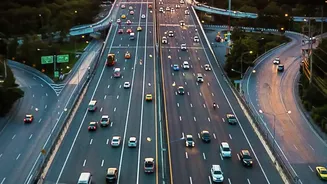





What is the Intelligent Traffic Management System?
For years, Delhi's traffic has largely been managed by fixed-time signals, leading to frustrating delays where you might wait at a red light even with no cross-traffic. The new ITMS, approved with a budget of nearly ₹1,790 crore, aims to replace this
outdated method. It's a comprehensive, technology-driven system designed to make traffic flow smoother and safer. At its core, the ITMS will use artificial intelligence, a network of over 2,500 cameras, and sensors to monitor traffic in real-time. Instead of rigid timers, signals will adapt dynamically based on actual vehicle density, a feature known as an Adaptive Traffic Control System (ATCS). The goal is to optimise the existing road network to handle Delhi's over 7.1 million active vehicles more efficiently.
C-DAC’s Role: The Technical Architect
The Centre for Development of Advanced Computing (C-DAC) is serving as the project management consultant for this massive undertaking. While Delhi Police will implement the project through a competitively selected integrator, C-DAC will provide crucial technical oversight. Their responsibilities include the initial technical scrutiny of the plan, monitoring progress, and validating that the system meets performance standards during both the implementation and the subsequent five-year operation and maintenance period. Union Minister Ashwini Vaishnaw described C-DAC's role as adding a "brain" to the city's traffic infrastructure, ensuring all components—from signals to cameras—work together as one harmonised system.
Automated Enforcement: The End of Unnoticed Violations
A major component of the ITMS is its automated enforcement capability at 1,029 locations. The system is designed to automatically detect a wide range of traffic violations using AI-powered cameras. Offences that will be flagged include jumping red lights, stop-line violations, speeding, wrong-way driving, and even not wearing a helmet or seatbelt. The system will also be able to identify drivers using mobile phones and illegally parked vehicles. Furthermore, AI-based analytics will help police identify stolen or blacklisted vehicles, track repeat offenders, and investigate hit-and-run cases by cross-referencing with platforms like VAHAN. Once a violation is detected, the data will be sent automatically to the e-Challan system for action.
Live Traffic Information for Commuters
The ITMS isn't just for enforcement; it's also designed to empower commuters with information. The system will provide real-time updates on traffic conditions, congestion, accidents, and diversions. This information will be displayed on Variable Message Sign (VMS) boards along key routes and shared through digital platforms. Authorities also plan to share this data with navigation service providers, allowing popular map applications to offer more accurate routes based on the very latest road conditions. This will help drivers make informed decisions to avoid snarls and plan their journeys better. The system will also give priority to emergency vehicles by creating 'green corridors', allowing ambulances to pass through congested areas with minimal delay.
The Road Ahead: A Phased Rollout
This ambitious project, which has been in discussion for over a decade, will not be implemented overnight. The rollout is planned in three phases over 24 months across 42 major traffic corridors. The first phase will focus on five key corridors, including Ring Road and Outer Ring Road. The subsequent phases will only proceed after the previous one has met all performance benchmarks, ensuring a robust and effective system. The entire project will be integrated into a central Traffic Command and Control Centre, bringing regulation, enforcement, and public information under a single, unified platform for a more predictable and efficient travel experience across the capital.