







The Unique Challenge of Water
Practicing yoga on solid ground allows your mind to focus on breath and alignment. On a paddleboard, your brain has a new, urgent priority: staying dry. The instability of the water means any lapse in concentration can send you for a swim. This isn't
a failure of your yoga practice, but a fundamental shift in dynamics. The constant, subtle adjustments required to maintain balance demand a higher level of mindfulness. Instead of a quiet studio, you're also dealing with wind, the sound of water, and other natural elements that can either be distractions or tools for deeper focus.
Embrace the Wobble, Don't Fight It
The first mental shift required for SUP yoga is to accept instability. Many beginners instinctively tense up, fighting every little wobble of the board. This resistance often creates more tension and makes balancing harder. Instructors advise a different approach: embrace getting wet and see falling in as part of the fun. By letting go of the fear of falling, your body can relax. Move slowly and mindfully, feeling how the board responds to your weight shifts. The goal is to move with the board, not against it. This acceptance reduces mental anxiety and frees up your mind to concentrate on the poses.
Anchor Your Gaze (Drishti)
In any yoga practice, 'Drishti'—a steady, focused gaze—is a powerful tool for concentration and balance. On a paddleboard, it becomes non-negotiable. Ancient yogis believed that where the gaze goes, the mind follows. By fixing your eyes on a single, unmoving point, you give your mind an anchor, which helps quiet external chatter and steady the body. For SUP yoga, choose a focal point on the horizon, a distant tree on the shore, or even the nose of your board. Avoid looking down at the moving water, as this can increase feelings of instability. This one-pointed focus is a foundational technique for moving from a state of distraction to one of deep concentration.
Connect with Your Breath (Pranayama)
Your breath is the ultimate tool for calming the nervous system and steadying the mind. In yoga, the conscious regulation of breath is called 'Pranayama'. When you feel wobbly or your mind starts to wander, bringing your attention back to slow, deep breaths can have an immediate stabilising effect. Techniques like Ujjayi breath, which involves a slight constriction at the back of the throat to create an audible, ocean-like sound, can be particularly effective. The rhythm of your breathing provides a constant, internal anchor that helps synchronise mind and body, promoting a state of dynamic tranquillity even amidst the board's movement.
Strengthen Your Core for Mental Freedom
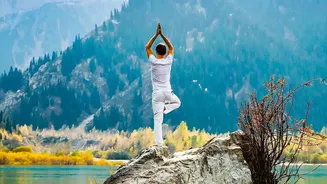
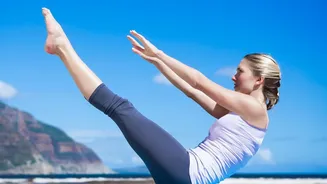
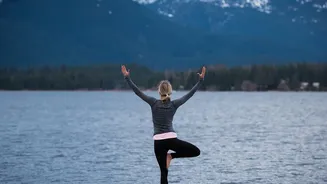
Physical stability and mental focus are deeply intertwined in SUP yoga. A strong, engaged core is the key to staying balanced on the board. When your core muscles are active, you create a solid foundation, which makes every pose more stable. This physical steadiness has a direct impact on your mind. With less energy spent on frantic micro-adjustments, your brain is free to focus on alignment, breath, and the meditative aspect of the practice. Poses that challenge balance on land, like Tree Pose or Warrior III, become intense core workouts on the water, forcing a level of complete presence and concentration.
Tune Into Nature, Not Out
One of the greatest benefits of floating yoga is the deep connection with nature. While outdoor sounds can initially seem like distractions, you can learn to incorporate them into your practice. Instead of fighting the sound of a bird or the lapping of water against your board, use them as objects of meditation. Let the feeling of the sun on your skin and the gentle rocking of the water enhance your Savasana (final relaxation pose). This shift in perspective transforms the environment from a source of distraction into a central part of a calming, meditative experience that reduces stress and enhances mental clarity.