






A High-Stakes Rescue Mission
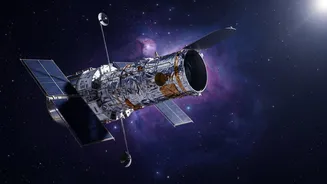
The plan was ambitious, sounding like something straight out of science fiction. NASA's Neil Gehrels Swift Observatory, a prolific hunter of gamma-ray bursts launched in 2004, was falling out of the sky. While still scientifically valuable, its orbit
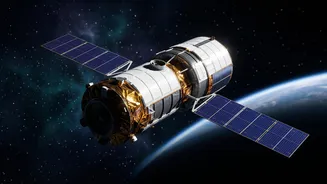
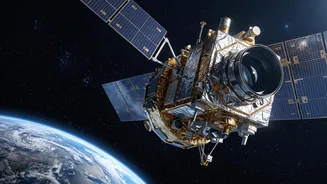
was rapidly decaying due to increased solar activity, and it was projected to burn up in Earth's atmosphere by late 2026. Instead of letting the multi-million dollar asset perish, NASA embarked on a bold experiment: for the first time, it would hire a private company to rescue a satellite that was never designed to be serviced. Arizona-based startup Katalyst Space Technologies was tapped for the $30 million "Swift Boost Mission." Their job was to build a robotic servicing vehicle, named LINK, launch it, chase down the Swift observatory, grab it with robotic arms, and gently push it into a higher, more stable orbit, extending its life for years to come.
What Went Wrong in Orbit
The LINK spacecraft was developed on an aggressive nine-month timeline and launched successfully in early July 2026. However, just a few weeks into its journey, disaster struck. In late July, the servicing vehicle began experiencing problems with its attitude control system, which manages the spacecraft's orientation in space. This critical fault caused the LINK spacecraft to begin spinning uncontrollably, leading to sporadic communications and issues with its thruster system. Despite weeks of effort by engineers to regain control, the problem proved insurmountable. Without precise attitude control, attempting to rendezvous and grapple with the delicate Swift telescope would be dangerously reckless. On August 19, NASA officially announced it was abandoning the rescue attempt.
The End of a Storied Observatory
With the cancellation of the rescue mission, the fate of the Swift Observatory is sealed. The telescope, which far outlived its initial two-year mission, will re-enter Earth's atmosphere and be destroyed, likely before the end of the year. For over two decades, Swift has been a cornerstone of high-energy astrophysics, providing crucial rapid-response data on some of the universe's most violent events, like exploding stars and the activity around black holes. Its loss will create a significant gap in astronomers' ability to quickly study these fleeting cosmic phenomena, a capability other current missions cannot easily replicate. NASA has said it will explore new options to fill the gap, but the immediate result is the end of a highly productive scientific instrument.
A Setback for a New Space Economy
The failure of the Swift Boost Mission is more than just the loss of one satellite; it's a significant and public setback for the entire on-orbit servicing (OOS) industry. This sector, which includes refueling, repairing, and relocating satellites, is projected to grow into a market worth billions. Companies like Katalyst are pioneers in a field that promises to make space operations more sustainable and economical by extending the lives of hugely expensive satellite assets rather than simply replacing them. This high-profile failure, a mission described by NASA as "high-risk, high-reward," highlights the immense technical challenges involved. It could make potential customers and investors more cautious, potentially slowing the adoption of these vital new technologies.