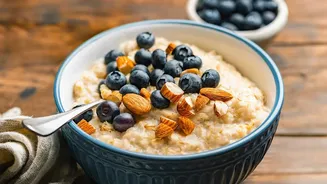





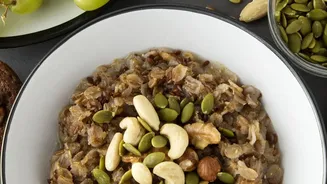
What Are Steel-Cut Oats?
Before we dive into the fibre, let's clarify what steel-cut oats are. All oats start as whole oat groats. To make steel-cut oats, these groats are simply chopped into two or three smaller pieces with a steel blade. This minimal processing is key. Unlike
rolled oats, which are steamed and flattened, or instant oats, which are pre-cooked and rolled thin, steel-cut oats retain more of their original structure. This gives them a chewier, nuttier texture and, more importantly, changes how their nutrients, especially fibre, are digested by your body.
A Tale of Two Fibres
Dietary fibre comes in two main forms: soluble and insoluble, and oats are a fantastic source of both. Soluble fibre dissolves in water to form a thick, gel-like substance in your gut. Think of the gooey, sticky texture of cooked porridge. Insoluble fibre, on the other hand, does not dissolve. Instead, it absorbs water and adds bulk to your stool, acting like a scrub brush for your digestive system. This helps promote regularity and keep your intestines healthy. Your body needs both types to function optimally, and steel-cut oats deliver a healthy dose of each.
The Power of Beta-Glucan
The most celebrated component of oat fibre is a type of soluble fibre called beta-glucan. This is the active compound responsible for many of oats' proven health benefits. When you eat steel-cut oats, the beta-glucan forms a viscous gel in your digestive tract. This gel does two remarkable things. First, it can trap cholesterol and bile acids, helping to remove them from your body and lower your overall LDL ('bad') cholesterol levels. The U.S. Food and Drug Administration has even approved a health claim related to this benefit, suggesting about 3 grams of beta-glucan daily can help reduce the risk of heart disease. Secondly, this gel slows down digestion, which has a positive effect on blood sugar.
Better Blood Sugar and Satiety
The slow digestion prompted by the fibre in steel-cut oats means that the carbohydrates are absorbed more gradually into the bloodstream. This prevents the sharp spikes in blood sugar that you might get from more processed breakfast cereals. Steel-cut oats have a low glycemic index (GI) of around 42-55, compared to rolled oats (around 57) and instant oats (which can be 83 or higher). This makes them an excellent choice for managing blood sugar levels. This slow-release energy also helps you feel fuller for longer. The combination of soluble and insoluble fibre adds bulk and slows stomach emptying, increasing satiety and potentially helping with weight management by reducing the urge to snack mid-morning.
How Do They Compare?
While all whole oats are nutritious, the minimal processing of steel-cut oats gives them a slight edge. Nutritionally, steel-cut and rolled oats are very similar in terms of calories and protein. However, steel-cut oats generally contain slightly more fibre per serving. A typical quarter-cup dry serving of steel-cut oats provides about 5 grams of fibre, which is a significant portion of the daily recommended intake. Because of their dense structure, steel-cut oats take longer to cook—around 20-30 minutes—compared to the 5-10 minutes for rolled oats. But for that extra time, you are rewarded with a lower GI response and a richer, chewier texture.