




The Annual Shift in the Air
Like clockwork, the withdrawal of the southwest monsoon marks the start of Delhi's pollution season. During the monsoon, rain acts as a natural scrubber, washing pollutants from the atmosphere. But as the rains retreat in late September and early October,
the air quality begins to deteriorate. Data from the first week of October 2026 already shows a significant dip in air quality, with the average Air Quality Index (AQI) being the second-most polluted for that period in the last six years. While still in the 'moderate' category, this is the predictable opening act for the 'poor', 'very poor', and 'severe' air quality days that lie ahead.
The Perfect Storm: Farm Fires and Weather
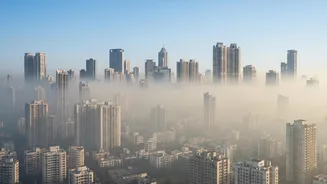
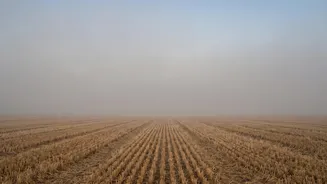
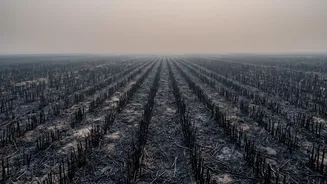
Two major factors converge to create this toxic cocktail. The first is stubble burning in neighbouring states, primarily Punjab and Haryana. Farmers burn paddy residue to quickly clear fields for the next crop. North-westerly winds carry this smoke directly into the National Capital Region. The second factor is meteorological. The post-monsoon period brings calmer winds and cooler nights. This leads to a phenomenon called temperature inversion, where a layer of warm air traps cooler, pollutant-laden air close to the ground, preventing it from dispersing.
Stubble Burning: A Persistent Challenge
While stubble burning is a known annual contributor, its intensity varies. As of early October 2026, satellite data shows that farm fires have begun, with incidents recorded in Punjab, Haryana, Uttar Pradesh, and Madhya Pradesh. Reports suggest that incidents in Punjab and Haryana are so far lower than in previous years, partly due to an emerging market for paddy straw as biomass fuel. However, the burning typically peaks in late October and early November, and authorities are deploying flying squads to monitor the situation on the ground. During its peak, stubble burning can account for up to 45% of Delhi's pollution.
Delhi's Own Pollutants Trapped in the Haze
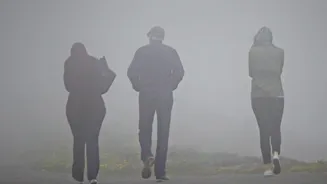
While smoke from farm fires is a major external trigger, Delhi's own local emissions form the hazardous base layer of pollution. These year-round sources include exhaust from the millions of vehicles on its roads, industrial emissions, dust from construction sites, and the burning of waste. In a normal weather pattern, these pollutants might disperse. But when trapped by the temperature inversion and calm winds of autumn and winter, their concentration at ground level rises dramatically, turning the entire region into what is often called a 'gas chamber'.
GRAP: The Government's Emergency Toolkit
To combat the annual crisis, authorities implement the Graded Response Action Plan (GRAP). This is a set of emergency measures that escalate based on AQI levels. The plan for 2026 has been revised to be more proactive, with some measures taking effect earlier. Stage 1 (AQI 201-300 'Poor') involves actions like enforcing pollution norms at construction sites. As the air worsens to Stage 3 ('Very Poor'), restrictions on plying older BS-III petrol and BS-IV diesel cars are enforced, with hefty fines for violators. At the most severe stages, measures can include a ban on non-essential construction, entry restrictions for trucks, and implementing a 50% work-from-home policy for offices.
The Toll on Health and How to Stay Safe
The health consequences of this pollution are severe and well-documented. Exposure to high levels of PM2.5 and other pollutants is linked to respiratory infections, chronic bronchitis, asthma attacks, heart disease, strokes, and even lung cancer. Children are particularly vulnerable, with studies showing irreversible lung damage in millions of Delhi's kids. During the high-pollution months, residents are advised to monitor the AQI daily, wear high-quality masks (like N95 or N99) when outdoors, use air purifiers indoors if possible, and avoid strenuous outdoor exercise, especially during the morning and evening when pollution levels are often at their highest.