

The Sudden End of an Era
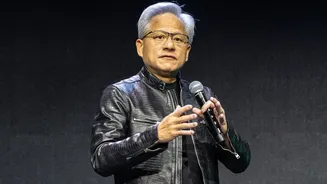
On November 12, 2026, Jensen Huang, the leather-jacketed co-founder who steered Nvidia from a niche graphics card maker to a multi-trillion-dollar AI behemoth, resigned as CEO. The departure came amid scrutiny of his personal conduct, leaving the tech
world reeling and investors questioning the future of a company synonymous with its leader. For decades, Huang was not just the CEO; he was the chief strategist, product visionary, and primary dealmaker. With reports confirming Nvidia had no formal succession plan, the board moved quickly, appointing CFO Colette Kress as interim CEO and initiating a search for a permanent replacement while grappling with the immense challenge of filling a founder's shoes.
The Product Roadmap as a Lifeline
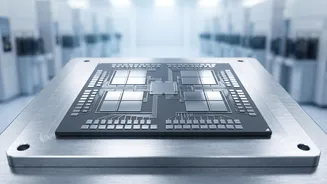
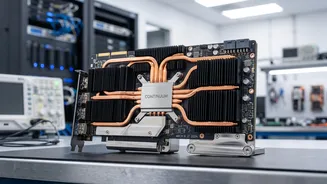
In the leadership vacuum, Nvidia's most powerful tool for projecting confidence is its relentless and highly public product roadmap. The company's strategy hinges on an annual cadence of architectural innovation, a pace competitors have struggled to match. With the Blackwell platform currently shipping in massive volumes, the company has already detailed its next-generation 'Vera Rubin' architecture, which is in production, and even previewed its successors: 'Vera Ultra' for 2027 and an entirely new platform, 'Feynman', for 2028. This aggressive, multi-year plan provides a clear technological path forward, assuring major customers that Nvidia’s performance edge will continue, regardless of who is in the corner office. The message is clear: the engine of innovation was designed to keep running.
From Supplier to Inescapable Partner
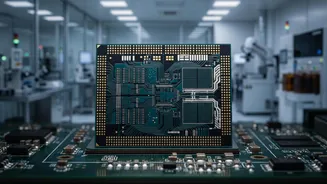
Beyond silicon, the second pillar of Nvidia's post-Huang strategy is to make itself structurally indispensable. This involves moving beyond being a mere supplier to becoming a deeply embedded strategic partner for its largest customers. The foundation of this is CUDA, the software platform that millions of developers have used for over a decade, creating a powerful ecosystem lock-in. But recently, this has been reinforced by massive new commitments to the physical supply chain. In late 2026, Nvidia announced expanded manufacturing and packaging partnerships with giants like TSMC, Foxconn, and Amkor. These deals are designed to significantly boost production capacity, directly addressing the hardware shortages that have constrained the AI industry and demonstrating a tangible commitment to meeting customer demand for years to come.
Navigating the Rise of Competitors
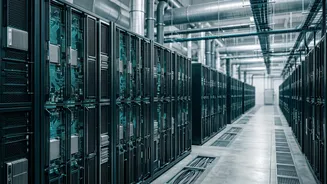
The stability plan is crucial because Nvidia faces a growing threat from its own customers. Tech giants like Google, Amazon, and Microsoft are all designing their own custom AI chips, often called ASICs, in an effort to reduce costs and their reliance on Nvidia. Huang's departure could embolden these efforts, as competitors sense a potential disruption. Nvidia’s counter-strategy is to ensure its integrated platform of hardware, software, and networking remains the most powerful and flexible option. By delivering an ambitious roadmap and guaranteeing supply, the company aims to make the performance trade-off of switching to a custom alternative too costly for even the biggest players. It's a bet that sheer, consistent performance can trump the appeal of bespoke, in-house alternatives.
The Search for a New Visionary
While the company's operational strategy is clear, the long-term question of vision remains. Interim CEO Colette Kress has a deep understanding of the company's finances and operations, and the board has expressed full confidence in her leadership during the transition. However, analysts note that replacing a founder who repeatedly reinvented the company—from PC graphics to AI data centres—is a monumental task. Huang famously maintained dozens of direct reports and was the central node for all major decisions. The board's search for a permanent CEO, which includes both internal and external candidates, is not just about finding a capable operator but someone who can inspire the next decade of innovation. The challenge is not just to execute Huang’s final plan, but to create the next one.