




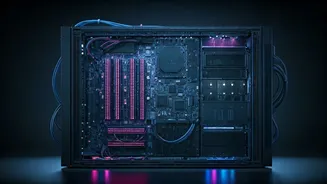



The Blackwell Performance Revolution
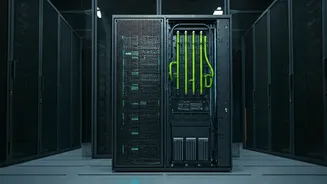
NVIDIA's latest hardware, the Blackwell series, represents a monumental leap in computing power. Specifically designed for the massive demands of artificial intelligence, the flagship GB200 Superchip combines powerful GPUs and CPUs into a single, integrated
system. This architecture is engineered to deliver a 30-fold increase in real-time performance for the large language models (LLMs) that power services like ChatGPT. By integrating components so tightly, NVIDIA aims to eliminate the data transfer bottlenecks that slow down traditional systems, offering a significant boost in both speed and efficiency for training and running complex AI models. The goal is to create 'AI factories' in a box—rack-scale systems like the NVL72, which links 72 Blackwell GPUs to act as one colossal processor, capable of tackling trillion-parameter models with ease.
The Billion-Watt Problem
This incredible performance comes at a steep, and very tangible, cost: power consumption. A single GB200 Superchip module can consume up to 1,200 watts. To put that in perspective, a high-end consumer GPU from a few years ago might have used around 300-400 watts. When these modules are stacked into a full server rack, like the GB200 NVL72, the power draw for that single cabinet can exceed 120 kilowatts (kW). This is a massive jump from the previous generation's racks, which typically drew around 35-45 kW. An AI data center with just 100 of these new racks could continuously consume 12 megawatts of power—equivalent to the electricity usage of about 10,000 homes. This exponential rise in energy demand is the central, practical snag threatening to slow down the AI revolution. The industry is hitting a hard ceiling, not of silicon potential, but of electrical infrastructure.
Why Air Cooling Is No Longer an Option
With such immense power draw comes an equally immense amount of heat. Traditional data centers have long relied on air cooling to keep servers from overheating. However, the heat density of Blackwell chips makes air cooling physically impossible. Air cooling systems can typically handle a maximum of around 25 kW of heat per server rack; the GB200 NVL72 generates nearly five times that amount. The heat flux at the surface of the chip itself is up to 100 times beyond what an air-cooled heatsink can manage. As a result, direct-to-chip liquid cooling has become mandatory for these next-generation systems. This involves circulating a coolant through pipes directly attached to the chips to carry heat away. While highly effective, it requires a complete overhaul of data center design, from plumbing and coolant distribution units to leak detection systems.
A Ripple Effect on Data Centers
The shift to liquid cooling and extreme power density is forcing a fundamental rethink of data center construction and operation. Facilities built just a few years ago for the 'air-cooled era' are now facing expensive retrofits that can cost millions of dollars. Beyond the racks themselves, the entire power chain is under strain. Data centers need to secure massive amounts of power from utility grids that are already stretched thin, a process that can take years. This has led some tech giants to explore radical solutions like building their own power plants or investing in small modular nuclear reactors just to keep their AI ambitions online. The bottleneck is no longer just about chip supply; it's about finding enough power and space to run them. This has also created production challenges, with reports of early deployment issues and manufacturing hurdles related to the complex packaging and design of the new chips.
The Search for a Cooler Future
In response, NVIDIA and the wider industry are racing to innovate on the infrastructure side. NVIDIA's latest designs for its upcoming 'Rubin' platform focus heavily on efficiency, touting systems that are entirely liquid-cooled with no fans at all. These systems are designed to operate with warmer coolant—up to 45°C—which dramatically reduces the need for energy-intensive chillers and can cut cooling-related energy costs significantly. In some climates, this could allow data centers to operate with 'dry coolers' that use outside air to cool the liquid, nearly eliminating water consumption. The future of AI's growth is becoming a two-part challenge: while chip designers like NVIDIA continue to push the boundaries of performance, a parallel effort is underway to build a world that can physically and sustainably support that power.