


The Iconic Andhra Combination
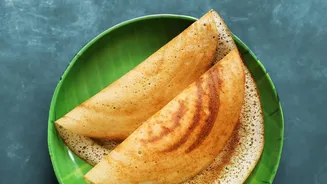
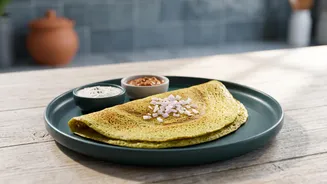
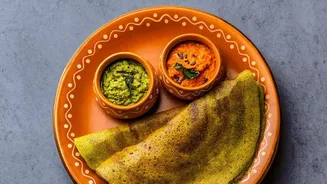
Pesarattu Upma brings two beloved South Indian dishes together in one delicious package. The ‘Pesarattu’ is a thin, crispy crepe made from a batter of whole green moong dal.. Its name comes from two Telugu words: 'pesara' (green gram) and 'attu' (crepe
or dosa). Unlike a regular dosa, the batter requires no fermentation, making it a relatively quick dish to prepare once the lentils are soaked. The filling is a simple, flavourful rava upma, a savoury porridge made from semolina. When a layer of soft upma is spread onto the crispy pesarattu and folded, it creates a delightful contrast in textures and flavours that is both hearty and wholesome. It's famously served in hotels across Andhra as a complete meal, often accompanied by a sharp ginger chutney.
Gathering Your Ingredients
For this recipe, you will need to gather ingredients for both the pesarattu and the upma. For the pesarattu batter, the star is one cup of whole green moong dal. You will also need a tablespoon of raw rice for crispiness, an inch of ginger, two green chillies for heat, a teaspoon of cumin seeds, and salt. For the upma filling, you’ll need half a cup of fine semolina (rava), one small chopped onion, one or two green chillies, a small piece of ginger, and a few curry leaves. For the tempering (tadka) of the upma, have half a teaspoon each of mustard seeds, chana dal (split Bengal gram), and urad dal (split black gram) ready, along with a tablespoon of oil or ghee. Finally, for topping the pesarattu, have some finely chopped onions ready.
Step 1: Soaking and Grinding the Batter
The first step is to prepare the pesarattu batter. Thoroughly wash the green moong dal and rice. Soak them together in ample water for at least four to six hours. Some recipes suggest an overnight soak, but a shorter time often yields a crispier crepe. Once soaked, drain the water completely. Transfer the dal and rice to a blender. Add the ginger, green chillies, cumin seeds, and salt. Blend everything into a smooth, thick paste. Add water sparingly, just enough to get the blender running. The final batter should have a consistency similar to a standard dosa batter—thick enough to be spreadable but not watery. Unlike other batters, this one doesn't need to be fermented and can be used immediately.
Step 2: Cooking the Upma Filling
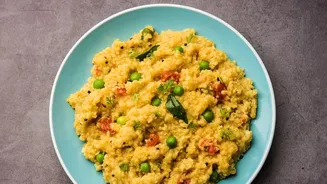
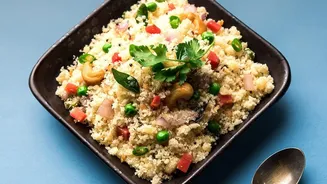
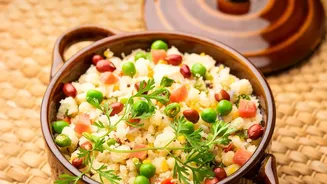
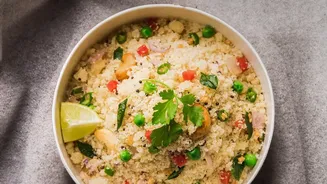
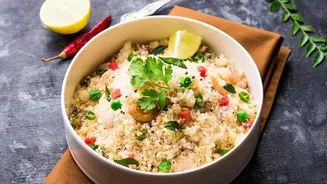
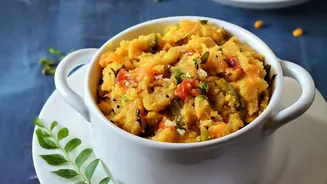
While your batter rests, prepare the upma. Heat a pan with oil or ghee. Add the mustard seeds and let them splutter. Follow with the urad dal and chana dal, frying until they turn a light golden brown. Now, add the chopped onion, green chillies, ginger, and curry leaves. Sauté for a few minutes until the onions become soft and translucent. Next, add about one and a half cups of water and salt, and bring it to a rolling boil. Once the water is boiling, reduce the heat to low and slowly pour in the semolina while stirring continuously to prevent lumps from forming. Continue to stir until the semolina absorbs all the water and is cooked through. The upma should be soft and almost pudding-like. You can add a teaspoon of ghee at the end for extra flavour. Set it aside.
Step 3: Assembling the Pesarattu Upma
Now it's time to bring everything together. Heat a non-stick tawa or a cast-iron griddle over medium heat. To check if it's ready, sprinkle a few drops of water; they should sizzle immediately. Lightly grease the tawa with oil. Pour a ladleful of the pesarattu batter onto the centre and spread it outwards in a circular motion to form a thin crepe. Drizzle a little oil or ghee around the edges. Sprinkle a generous amount of finely chopped onions over the surface. Let it cook until the bottom turns golden brown and the edges start to lift from the pan. At this point, take a large spoonful of the prepared upma and spread it over one half of the pesarattu. Gently fold the other half over the filling. Press down lightly with a spatula and cook for another thirty seconds before sliding it onto a plate.