








The Dream of an Airborne Nation
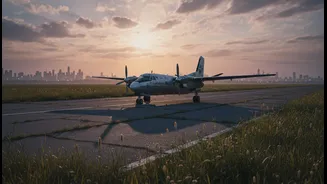
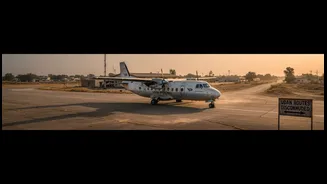
Launched in 2016, the Ude Desh ka Aam Nagrik (UDAN) scheme was a revolutionary idea. Its goal was to connect India's smaller towns and remote regions by air, making flights as accessible as train journeys for millions. The plan was simple: the government
would subsidise airlines to fly on routes that weren't traditionally profitable. In exchange for this financial support, known as Viability Gap Funding (VGF), airlines would cap fares on a portion of seats, famously starting at around ₹2,500 for a one-hour flight. The vision was to activate hundreds of underused airstrips, boost local economies, and truly democratise air travel beyond the major metros.
Why So Many Flights Are Grounded
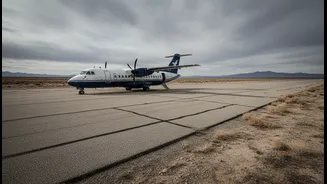
Despite its noble intentions, the scheme has hit significant turbulence. As of early 2026, reports and government data revealed a stark reality: out of the hundreds of routes launched since 2017, nearly half are no longer operational. The primary reason is an economic one. The VGF subsidy was typically granted for a three-year period, with the assumption that routes would become self-sustaining by then. However, on many routes, passenger demand never grew enough to cover the operational costs once the support ended. Airlines, facing the full economic burden, were forced to withdraw services from airports like Kalaburagi and Bidar in Karnataka once the subsidy period was exhausted. Other factors include unpreparedness of small airports, shortages of suitable aircraft, and broader supply chain issues plaguing the aviation industry.
The Anatomy of a Flight Ticket
To understand why the subsidy was so crucial, it helps to break down a standard flight ticket. Your total fare isn't just one number; it's a sum of several parts. First is the base fare, which is what the airline charges to cover its own costs like staff, maintenance, and hopefully, make a profit. Then comes the fuel surcharge, which can be substantial, as Aviation Turbine Fuel (ATF) accounts for 40-50% of an airline's operating costs in India. On top of that are government and airport charges: GST, Passenger Service Fee (PSF) for security, and User Development Fee (UDF) for airport upkeep. The airline only truly controls the base fare and the fuel surcharge.
What UDAN Subsidies Were Hiding
The UDAN scheme worked by artificially lowering the base fare component for the passenger. The VGF from the government essentially paid the airline the portion of the fare that passengers weren't paying. This created the illusion of a commercially viable ₹2,500 flight. When the VGF expired, the airline was faced with a choice: either raise fares to reflect the true cost of operation or abandon the route if not enough people were willing to pay the higher, unsubsidised price. The mass discontinuation of routes demonstrates a simple truth: the actual cost of flying to many of these smaller towns was significantly higher than the capped fare. The subsidy was not creating a market; it was temporarily propping one up.
The Real Definition of 'Affordable'
The discontinued routes force a re-evaluation of what an 'affordable' fare truly is. While a subsidised ticket is cheap for the passenger, it isn't a sustainable price. The grounding of these flights reveals the baseline cost required to run an airline service without perpetual government support. It highlights that true affordability is tied to sustainable demand — enough passengers willing to pay a price that covers the high costs of fuel, maintenance, and airport fees. The struggles of the UDAN scheme teach a valuable lesson for travellers: the price on a non-subsidised ticket, while higher, is a more honest reflection of the immense operational and logistical costs involved in getting an aircraft safely from one city to another.