





The Sun’s Fiery Outbursts
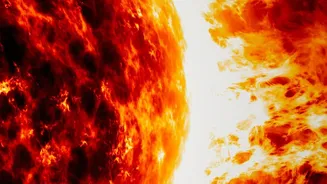
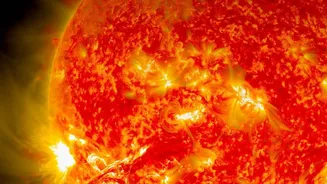
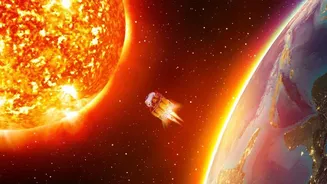
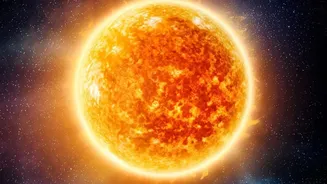
Our Sun is not the perfectly calm, steady star it appears to be. It has a dynamic and often violent atmosphere. A solar flare is a massive explosion on the Sun's surface, a sudden and intense release of magnetic energy. This explosion sends a wave of radiation
and energetic particles hurtling through space. When Earth is in the firing line, these events create what we call space weather. These are not storms of wind and rain, but of charged particles and radiation that can have profound effects on our planet and its technological systems. Major solar events are categorised as a global hazard, capable of disturbing the Earth's magnetosphere and inducing powerful currents on the surface.
A Subtle Warning Flicker
Predicting exactly when and where a major flare will erupt has been a huge challenge for scientists. However, recent research, including work by Indian scientists, is revealing a critical clue: pre-flare brightening. Think of it like the small sparklers before the main fireworks show. In the hours leading up to a large solar flare, scientists have observed numerous small, short-lived brightening events in the Sun's atmosphere, particularly in the corona, its upper layer. These are not random flickers; they tend to cluster around the exact location where the larger flare will eventually occur. These brightenings represent small-scale releases of magnetic energy, which seem to progressively destabilise the area, making a major eruption more likely.
From Signal to Forecast
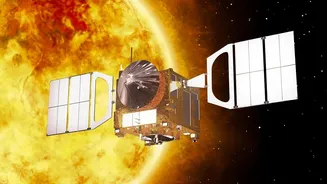
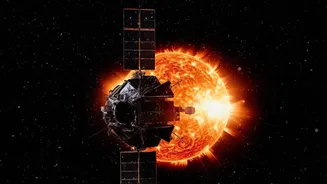
This pre-flare activity acts as a crucial precursor, giving us a potential heads-up. By monitoring these subtle changes, scientists can identify which active regions on the Sun are more likely to produce a flare in the near future. Instruments like those on India's Aditya-L1 solar observatory are designed to capture this data, using ultraviolet and X-ray telescopes to spot these telltale energy releases. The goal is to move from simply knowing a flare has happened to reliably forecasting it. Combining data on these coronal brightenings with other indicators, like changes in sunspots, allows for a more complete picture of the Sun's activity, which is essential for improving the lead time of space weather predictions.
The High-Tech Domino Effect
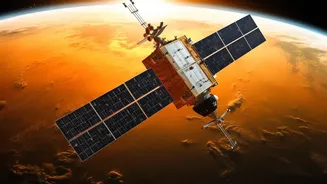
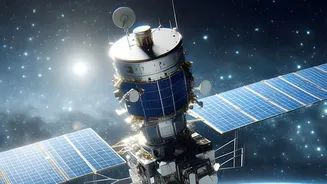
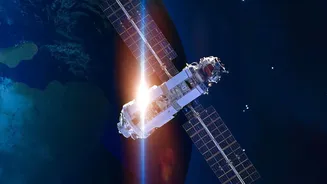
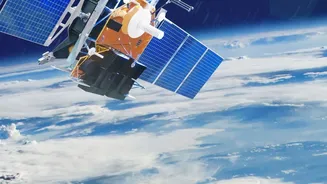
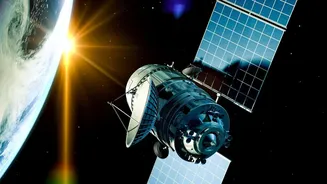
So why does this early warning matter so much? Because severe space weather can be catastrophic for our modern infrastructure. Geomagnetic storms can induce powerful currents in long conductors on Earth, like power lines and pipelines. These geomagnetically induced currents (GICs) can overload high-voltage transformers, potentially causing widespread and long-lasting power outages. Beyond the grid, the energetic particles from a solar event can damage satellites, disrupting everything from GPS navigation and telecommunications to financial transactions and weather forecasting. Radio communications can be blacked out, and even airline travel can be affected. In essence, the technologies that underpin our daily lives are highly vulnerable.
Protecting India's Digital Future
For a nation like India, which is undergoing a rapid digital transformation, the stakes are incredibly high. Our economy is increasingly reliant on a stable power grid, robust satellite networks, and uninterrupted digital communications. Imagine the impact of a severe space weather event on industrial hubs in Gujarat, the national power grid, or the UPI payment system. The economic consequences of such disruptions, from supply chain interruptions to lost production, would be immense. Early and accurate forecasting, made possible by understanding phenomena like pre-flare brightening, gives operators time to take protective measures. This could involve rerouting power, taking sensitive satellites into a safe mode, or rescheduling flights. It’s about building resilience and safeguarding the technological progress that is vital to India's growth.