





1. Cat-Cow Pose (Marjaryasana-Bitilasana)
A foundational yoga sequence, Cat-Cow is a gentle flow that warms up the spine and softly engages the abdominal muscles. The movement can also stimulate the organs in the belly, which may aid in digestion. It’s an excellent way to start a practice or to simply
relieve stiffness after long periods of sitting. To begin, position yourself on your hands and knees in a 'tabletop' position, with your wrists aligned under your shoulders and your knees under your hips. As you inhale, drop your belly towards the mat, lift your chest and tailbone, and look forward into Cow Pose. As you exhale, round your spine toward the ceiling, tuck your chin to your chest, and press the mat away from you into Cat Pose. Continue flowing between these two poses for five to ten breaths, synchronising the movement with your breathing to create a gentle abdominal massage.
2. Wind-Relieving Pose (Pawanmuktasana)
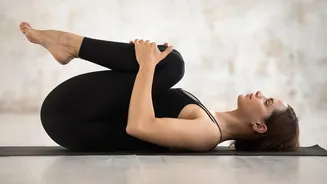
As its name suggests, this pose is traditionally used to help release trapped gas and alleviate bloating. It provides a gentle compression to the abdominal organs, which can stimulate digestion and relieve discomfort. To practice, lie on your back with your legs extended. As you exhale, draw both knees toward your chest. Wrap your arms around your shins, clasping your hands or holding opposite elbows. Keep your head and shoulders relaxed on the floor. Hold the pose for 30 seconds to a minute, breathing deeply into your belly. With each exhalation, you might gently hug your knees closer to your chest to deepen the massage on your abdomen. For a gentler variation, you can practice this pose one leg at a time.
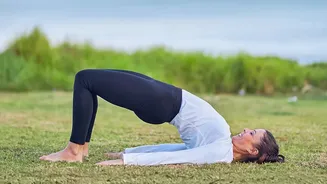
3. Bridge Pose (Setu Bandhasana)
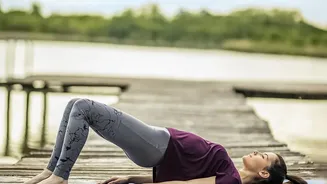
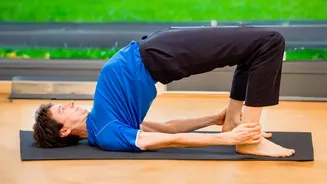
Bridge Pose is a gentle backbend that helps to strengthen the back, glutes, and hamstrings while creating a mild stretch across the abdomen. This extension of the front body can help stimulate abdominal organs and improve circulation. To get into the pose, lie on your back with your knees bent and feet flat on the floor, hip-width apart. Your arms should be alongside your body with palms facing down. Press into your feet and arms to lift your hips off the floor, creating a straight line from your shoulders to your knees. Be mindful not to let your knees splay out to the sides. Hold for 30 to 60 seconds, breathing steadily, before slowly lowering your spine back down to the mat one vertebra at a time.
4. Supine Spinal Twist (Supta Matsyendrasana)
Twisting poses are renowned for their detoxifying effects and ability to 'wring out' the digestive organs, which can aid in motility and relieve bloating. The Supine Spinal Twist is a restorative version that is accessible to all levels. Start by lying on your back. Draw your right knee into your chest, then extend your left leg long. Extend your right arm out to the side at shoulder height. On an exhale, guide your right knee across your body to the left side. Try to keep both shoulders grounded on the mat, even if your knee doesn't touch the floor. You can place a cushion or block under your knee for support. Hold for at least five deep breaths, feeling the stretch in your spine and outer hip, then repeat on the other side.
5. Gentle Cobra Pose (Bhujangasana)
Cobra Pose is a gentle backbend that stretches the abdominal muscles and can encourage better posture. This gentle pressure on the abdomen can stimulate the digestive system. For a gentle version, lie on your stomach with your legs extended and the tops of your feet on the mat. Place your hands under your shoulders, keeping your elbows close to your body. Inhale and gently lift your head and chest off the floor, keeping your lower ribs on the ground and a slight bend in your elbows. Draw your shoulders away from your ears and keep your gaze neutral or slightly forward to avoid straining your neck. This mild lift provides a beneficial abdominal stretch without putting pressure on the lower back. Hold for a few breaths before gently releasing back down.