




The Dark Side Communication Problem
For as long as humans have explored space, the far side of the Moon has presented a fundamental challenge: a communications blackout. The Moon’s own mass blocks radio signals, meaning any mission on the far side or in certain polar regions loses direct
contact with Earth. During the Apollo era, this meant astronauts experienced periods of total radio silence while orbiting the Moon. This limitation has historically made landing, operating rovers, or building habitats in these scientifically valuable areas incredibly risky and complex. To establish a permanent foothold and explore these uncharted territories, constant and reliable communication is not a luxury—it is a necessity.
Enter LunaNet: A GPS For The Moon
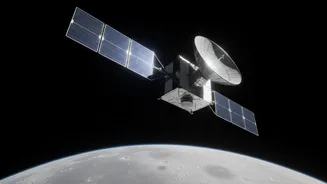
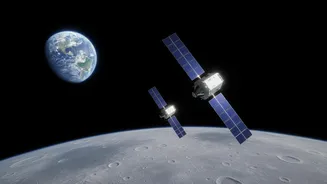
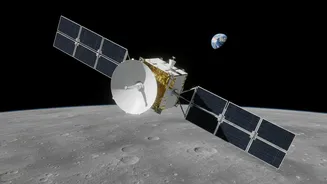
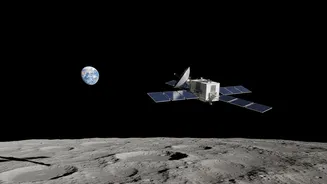
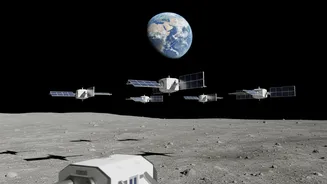
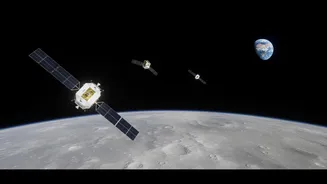
NASA's solution is an ambitious architecture called LunaNet. Think of it as building an internet and GPS service for the Moon. Managed by NASA's Space Communications and Navigation (SCaN) program, LunaNet is not a single satellite but a framework for a network of interconnected orbiters. These satellites, provided by both NASA and commercial partners, will work together to create a seamless web of connectivity. The system is designed to provide three core services: networking, navigation and timing (PNT), and science utilization. This means missions on the surface or in orbit can communicate with each other and with Earth, pinpoint their exact location, and keep perfectly synchronized time.
How The Relay System Works
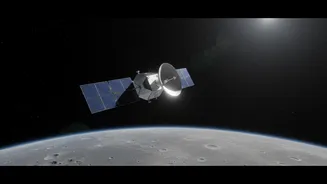
The concept behind LunaNet is elegantly simple. Satellites will be placed in various lunar orbits, acting as relay stations. A rover on the far side, for example, would send its data up to one of these orbiting satellites. That satellite can then either relay the signal directly to Earth if it has a line of sight, or pass the data packet to another satellite in the network until it reaches one that does. This "store-and-forward" capability, a core part of what's known as a Delay/Disruption Tolerant Network (DTN), ensures that data isn't lost even if a direct link isn't immediately available. This creates a continuous communications chain, effectively eliminating the blackout zones that have long hampered lunar exploration.
Unlocking New Frontiers for Science
With LunaNet in place, the most challenging lunar environments become accessible. Scientists have long dreamed of placing a radio telescope on the far side, which is uniquely shielded from Earth's radio noise, making it the quietest place in the inner solar system for astronomy. Likewise, the permanently shadowed craters of the lunar south pole, believed to contain vast deposits of water ice, become viable targets for robotic and human exploration. A reliable navigation network is critical for rovers to precisely geotag scientific samples, allowing for a much deeper understanding of the Moon's geology and history. It transforms these regions from high-risk novelties into accessible laboratories.
Enhancing Astronaut Safety and Mission Autonomy
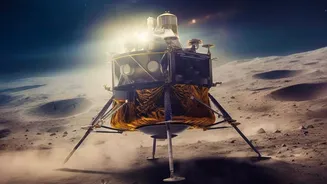
For Artemis astronauts living and working on the Moon, LunaNet is a lifeline. It will provide continuous communication, high-definition video streaming, and precise navigation for lunar landings and surface excursions (EVAs). This constant connection is vital for monitoring astronaut health, providing ground support during complex tasks, and managing emergencies. Furthermore, the PNT services will allow for greater mission autonomy. Instead of relying solely on Earth-based mission controllers for every maneuver, future spacecraft and rovers can use the network to navigate independently, similar to how we use GPS on Earth. This increases safety, efficiency, and the flexibility of missions.
The Foundation for a Lunar Economy
Ultimately, LunaNet is about more than just supporting NASA's missions. It is foundational infrastructure for a future lunar economy. By creating an open, interoperable standard, NASA is encouraging international partners and commercial companies to contribute to and use the network. Private companies planning to mine lunar resources, conduct scientific research, or even establish tourist outposts will depend on these communication and navigation services. Just as GPS on Earth unlocked countless unforeseen applications and a multi-billion dollar industry, LunaNet is designed to be the backbone that supports the long-term, sustainable, and commercially vibrant human presence on the Moon.