




Why Plants Play Follow the Sun
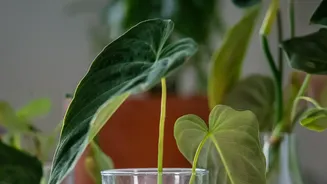
The tendency for plants to grow towards a light source is a natural survival instinct called phototropism. This process is driven by growth hormones, primarily one named auxin, which accumulates on the shadier side of the plant's stem. These auxins cause
the cells on the dark side to elongate more than the cells on the sunny side. This uneven growth results in the stem bending and leaning towards the window or lamp, ensuring its leaves can capture as much light as possible for photosynthesis, the process of converting light into energy. While brilliant for a plant in the wild, in your living room this results in a perpetually crooked, uneven plant that looks like it's trying to escape its pot. Regular rotation is the key to counteracting this and encouraging straight, symmetrical growth.
The Shock of a Sudden Turn
Seeing a lopsided plant, your first instinct might be to give it a 180-degree spin to even things out. However, this can cause a form of 'environmental shock'. The leaves on the shady side have adapted to lower light conditions. When they are suddenly thrust into direct, bright light, they can't always cope. The plant's internal systems, which have been optimized for a specific light orientation, are forced into a stressful scramble to readjust. This shock can manifest in several ways, including yellowing leaves, drooping, stunted growth, or even leaf scorch, where patches of the leaf turn brown and crispy. For particularly sensitive plants, this abrupt change can lead to significant leaf drop as the plant sheds foliage it can no longer support.
The Gentle Rotation Method
The best practice is a slow and steady approach. Most experts recommend giving your plant a quarter turn (90 degrees) on a regular basis. The ideal frequency depends on your plant and its growth rate, but a good rule of thumb is to rotate it a quarter turn once a week or every time you water. This simple habit ensures that all sides of the plant get a chance to face the light over the course of a month, promoting balanced growth from all angles. Consistency is key. Always turning the pot in the same direction makes the routine easier to remember and provides a steady, predictable change for your plant, minimizing stress and maximizing healthy, upright development.
Sensitive vs. Easy-Going Plants
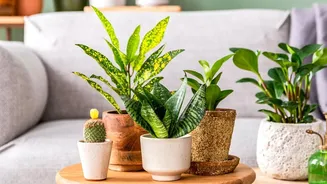
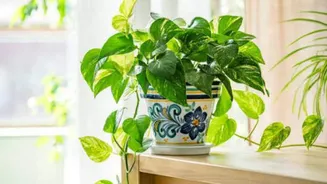
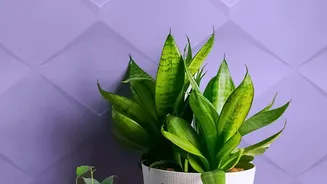
While all plants benefit from rotation, some are more sensitive to abrupt changes than others. The Fiddle Leaf Fig (Ficus lyrata) is notoriously dramatic and can drop leaves if its conditions change suddenly. Other ficus varieties, citrus trees, and gardenias are also known to be fussy about their placement. Plants with intricate variegation may also require careful rotation to maintain their patterns. On the other end of the spectrum are famously tolerant plants. The Snake Plant (Dracaena trifasciata) and ZZ Plant (Zamioculcas zamiifolia) are far more forgiving. These low-maintenance champions are less likely to protest a sudden turn, although they will still grow more symmetrically with gradual rotation. Pothos and Corn Plants are also known for being resilient and adaptable to different conditions. Observing your specific plant is always the best guide.
More Than Just a Turn
While rotation is the primary tool for a symmetrical plant, other care aspects contribute to its overall shape and health. The simple act of turning your plant is also a perfect opportunity to inspect it. Check the leaves for dust, which can block light and hinder photosynthesis, and look for any early signs of pests. Wiping down the leaves monthly can make a big difference, especially for large-leafed varieties like the Fiddle Leaf Fig. Pruning can also help shape your plant, encouraging it to become fuller and more balanced. For flowering plants like orchids that have already developed buds, it is often best to stop rotating them, as a change in light orientation can sometimes cause the plant to drop its buds before they open.