









More Than a Forest: What is a Carbon Sink?
Think of a carbon sink as a massive natural sponge. As human activities like burning fossil fuels release vast amounts of carbon dioxide (CO2) into the atmosphere, these sinks absorb it. Forests, oceans, and even soil act as critical carbon sinks, pulling
CO2 out of the air and storing it in wood, leaves, and organic matter. This process, called carbon sequestration, is one of our most effective tools in the fight against climate change. Forests are particularly powerful in this regard, with tropical forests leading the charge. By storing carbon that would otherwise trap heat in the atmosphere, healthy forests help regulate the global climate. This makes their preservation not just an ecological goal, but a crucial component of national and global climate strategy.
The Western Ghats: A Carbon Powerhouse
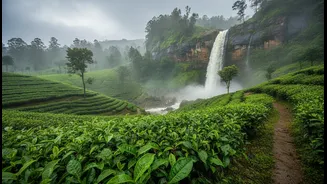
Stretching over 1,600 kilometres along India's western coast, the Western Ghats are more than just a mountain range; they are an ecological and climatic powerhouse. Scientific studies have begun to quantify their immense value as a carbon reservoir. Research indicates that the forest ecosystems of the Western Ghats hold a staggering 1.23 billion tons of carbon in their vegetation and soil. Every year, these forests absorb an additional 37.5 million tons of carbon. Some estimates suggest the region neutralises around 4 million tonnes of carbon annually, which could be up to 10% of the emissions absorbed by all of India's forests. A recent study from the Indian Institute of Tropical Meteorology (IITM) even projects that, under certain climate scenarios, the Western Ghats could become one of India's most significant carbon sinks by the end of the century.
Putting a Price on Preservation
The economic argument for conservation crystallises when this stored carbon is assigned a monetary value. With the emergence of carbon markets, this is no longer a theoretical exercise. Under India's Carbon Credit Trading Scheme (CCTS), one carbon credit certificate represents one tonne of CO2 equivalent that has been reduced or removed from the atmosphere. Applying this framework, the value of carbon sequestered in the Western Ghats is immense. One 2019 study estimated the value at approximately ₹100 billion (or $1.4 billion at the time), based on a carbon trading price of about $30 per tonne. Another assessment focusing on just five protected areas in Karnataka calculated the economic value of their carbon sequestration at over $17.5 million annually. These figures transform conservation from a perceived cost into a tangible economic asset, creating a financial incentive to protect and restore these vital ecosystems.
An Asset Under Threat
Despite this clear ecological and economic value, the Western Ghats are under severe pressure. Deforestation for agriculture, plantations, and infrastructure projects like dams and roads has fragmented this once-continuous forest belt. Studies have documented a significant decline in evergreen forest cover over the decades. These activities not only destroy habitats for countless endemic species but also release vast amounts of stored carbon back into the atmosphere, turning a valuable sink into a source of emissions. Unregulated mining, quarrying, and pressures from human settlements further degrade the ecosystem. This degradation not only jeopardises biodiversity and local livelihoods but also erodes a critical natural asset that is essential for India's long-term climate resilience.
The Path to a Green Economy
Recognising the economic value of the Ghats' carbon sink potential offers a powerful new path for conservation policy. It reframes protection not as a barrier to development, but as a form of sustainable investment. India's evolving carbon market provides a mechanism to finance conservation efforts. By generating carbon credits from reforestation and avoided deforestation, funds can be channelled back into protecting the forests and supporting the local communities who are their primary custodians. This approach aligns with national climate goals, including India’s pledge to create an additional carbon sink of 2.5 to 3 billion tonnes of CO2 equivalent through forest and tree cover by 2030. Integrating the economic value of ecosystem services into land-use planning, as recommended by expert panels like the Gadgil and Kasturirangan committees, is essential to ensure this natural wealth is not squandered.