



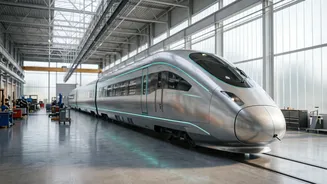
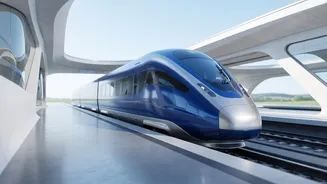
What is this LNG Train?
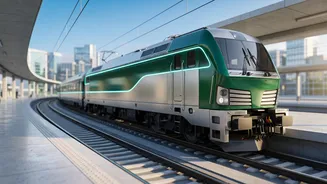
On September 27, 2026, a modified Diesel Electric Multiple Unit (DEMU) train made its inaugural run from Sabarmati in Gujarat. What makes it unique is its dual-fuel system. For the first time, Indian Railways has retrofitted the train's engines—located
in what are called Driving Power Cars (DPCs)—to run on both diesel and LNG. These are self-propelled trains where the power source is part of the passenger coaches, unlike traditional trains pulled by a separate locomotive. This specific train has two 1,400-horsepower DPCs that have been converted to use a blend of fuels, a system that successfully completed over 2,000 kilometres of field trials before its first passenger journey.
A Dual-Fuel Approach, Not a Full Switch
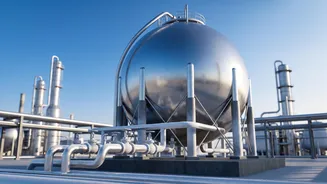
The key here is the term “dual-fuel.” The train isn't running purely on LNG. Instead, the technology allows LNG to substitute for about 40% of the diesel that the engine would normally consume. This hybrid approach provides crucial flexibility; the train can operate on its conventional diesel system if LNG is unavailable. The retrofitted DPCs are equipped with special cryogenic tanks that can hold around 2,200 litres of LNG, which is natural gas cooled to -162°C to turn it into a liquid. This setup allows the train to cover a significant distance, with estimates suggesting one full tank can support around 444 kilometres of daily operation.
The Promise: Cleaner and Cheaper
The primary motivations for this trial are environmental and economic. Using LNG, even as a partial substitute, helps reduce harmful emissions, including carbon dioxide, nitrogen oxides, and particulate matter, compared to running on diesel alone. This aligns with Indian Railways' ambitious goal to become a net-zero carbon emitter by 2030. There's also a significant cost benefit. Indian Railways anticipates that the use of cheaper LNG could lead to annual fuel savings of around ₹23.9 lakh for an eight-coach train. The technology has been designed to deliver these benefits without compromising the engine's power or performance.
Why Is It Just a Trial?
While promising, this initiative is a cautious first step. The headline is correct to frame it as a trial rather than a complete fuel revolution. For one, creating the necessary infrastructure for storing and supplying LNG across India's vast rail network would be a massive and costly undertaking. Furthermore, while cleaner than diesel, LNG is still a fossil fuel and not a zero-emission solution like the hydrogen-powered train also being trialled by Indian Railways. The LNG trial is best seen as a strategic exploration of an intermediate solution, especially for routes where other green options are not yet feasible.
The Bigger Picture: Electrification Remains the Priority
This LNG experiment does not change Indian Railways' primary long-term strategy: 100% electrification. The government has been aggressively pursuing its 'Mission 100% Electrification' goal, and as of late 2025, over 99% of the broad-gauge network was already electrified. Electric trains are cheaper to operate, more efficient, and can be powered by renewable energy sources, making them the gold standard for sustainable rail transport. The LNG dual-fuel system, therefore, isn't a competitor to electrification but a practical solution for specific train types like DEMUs, which cannot be easily hauled by electric locomotives and still run on diesel on non-electrified or transitioning sections.