





A New Global Leader
In a historic moment for the aviation industry, Seoul's Incheon International Airport (ICN) has officially become the world's busiest hub for international passenger traffic. According to preliminary figures from Airports Council International (ACI) for the first
half of 2026, Incheon handled nearly 38.4 million international passengers. This edged out London Heathrow (LHR), which processed approximately 37.8 million, marking the first time the South Korean airport has claimed the coveted top position since its opening in 2001. Singapore's Changi Airport ranked third, underscoring a broader trend of growing aviation power in Asia. This isn't just a statistical blip; it represents a significant reordering of global travel routes and a testament to years of strategic planning.
The Incheon Growth Strategy
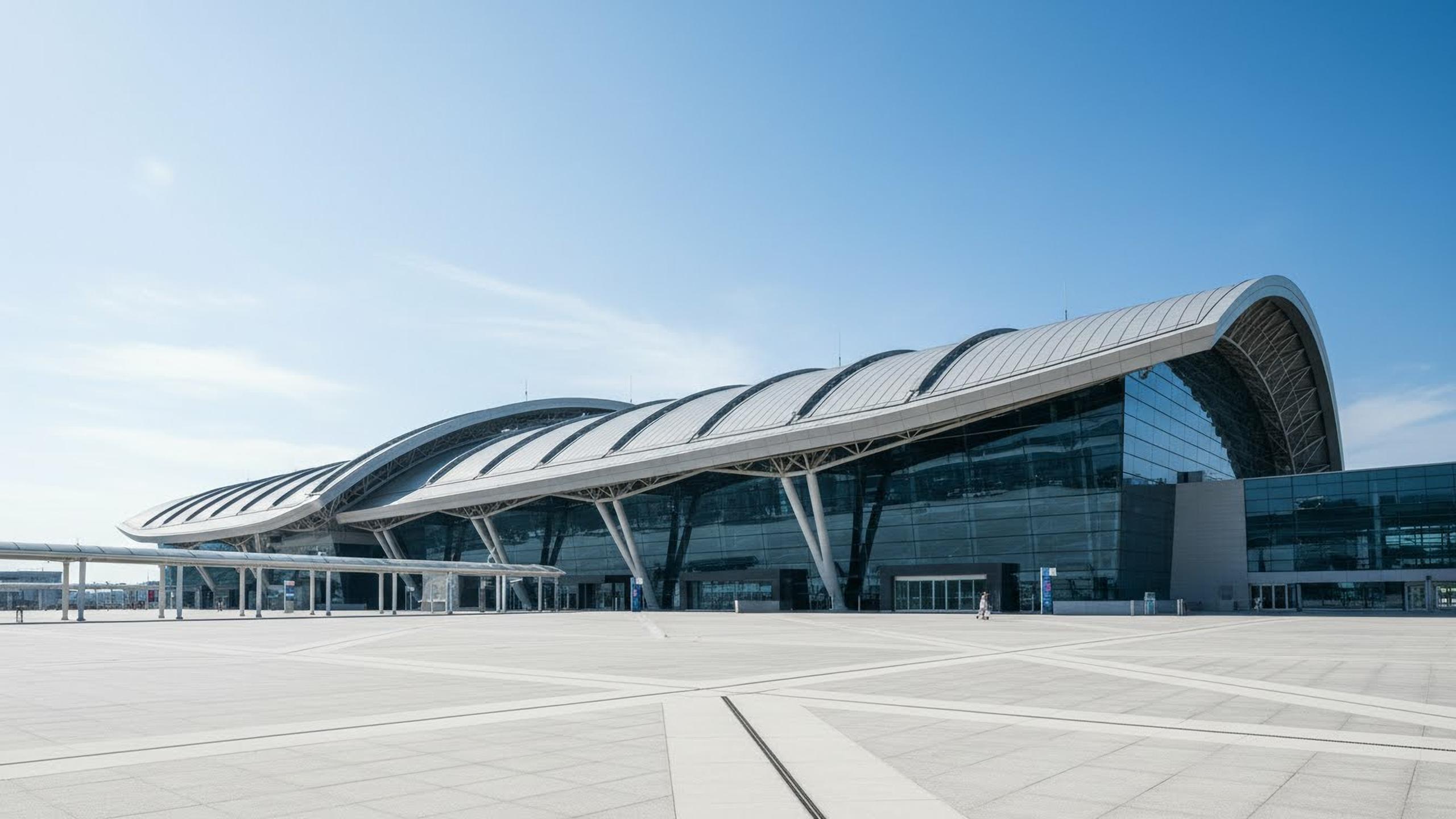
Incheon's ascent is no accident. The airport has methodically climbed the ranks, moving from 10th place in 2002 to third by 2024. A key driver of its recent surge has been a massive increase in transfer passengers. The airport corporation reported an 18% year-on-year rise in transfer traffic in the first half of 2026. Recent geopolitical instability in the Middle East has played a role, with some travellers on Europe-Asia routes being rerouted through Incheon instead of traditional hubs like Dubai. This resulted in a staggering 63.2% increase in transfer traffic to Europe alone. Furthermore, a recently completed four-phase expansion project has boosted Incheon's annual capacity to 106 million passengers, giving it the third-largest capacity in the world and the infrastructure to support its ambitions. The airport now serves 183 cities via 101 airlines, giving it a more extensive network than regional rivals in Hong Kong and Shanghai.
Headwinds Facing Heathrow
While Incheon has been surging, Heathrow has faced a more complex recovery. The London hub has been operating at near-full capacity for years, with debates over a third runway stretching on. In July 2026, passenger numbers dipped by 1.5% compared to the previous year. This was partly attributed to a significant 20.2% drop in traffic on Middle East routes due to regional conflict. These disruptions have led Heathrow to revise its 2026 passenger forecast downwards from its initial projections. While demand remains strong overall, with the airport handling its busiest day of the year in July, these external pressures and capacity constraints have created an opening for fast-growing competitors. The airport has pointed to its loss of the top European spot to Istanbul in July as further evidence that expansion is critical for the UK to maintain its status as a premier global hub.
The Bigger Picture: A Global Rebalancing
The crowning of Incheon is more than a story about two airports; it's a clear signal of a broader rebalancing in global aviation. For years, the industry's centre of gravity has been shifting eastward, driven by economic growth and rising middle-class populations in Asia. Airports in the Asia-Pacific and the Middle East have invested heavily in state-of-the-art infrastructure and passenger experience, positioning themselves as critical crossroads for global travel. The ACI notes that while long-term growth in air travel is expected to be strong, it will be unevenly distributed, with emerging markets poised to capture an increasingly larger share. This shift challenges the long-held dominance of European and North American hubs and points toward a more multipolar aviation world where connectivity is less dependent on traditional gateways.