

Cosmic Dust: More Than Just Fluff
When we think of dust, we might imagine the stuff that collects on bookshelves. But in the cosmos, dust is a fundamental building block. These tiny particles, often smaller than the width of a human hair and composed of elements like carbon, silicon,
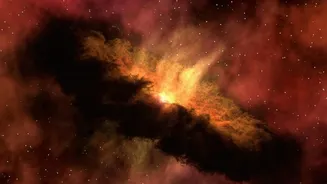
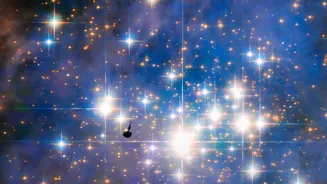
and iron, populate the vast interstellar medium. Though they make up only a small fraction of the interstellar medium's mass, their impact is enormous. Interstellar dust grains act as shields, protecting newly forming molecules in dense clouds from harsh starlight. They are also the surfaces on which chemical reactions occur, helping to create complex molecules, including the precursors to life. Most importantly, these grains are the seeds from which new stars and planets are made. By clumping together over millions of years, they form the cores of new celestial bodies.
Introducing NASA's PUFFINS Mission
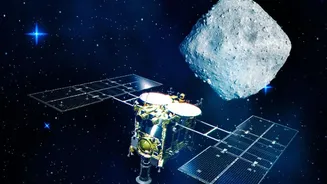
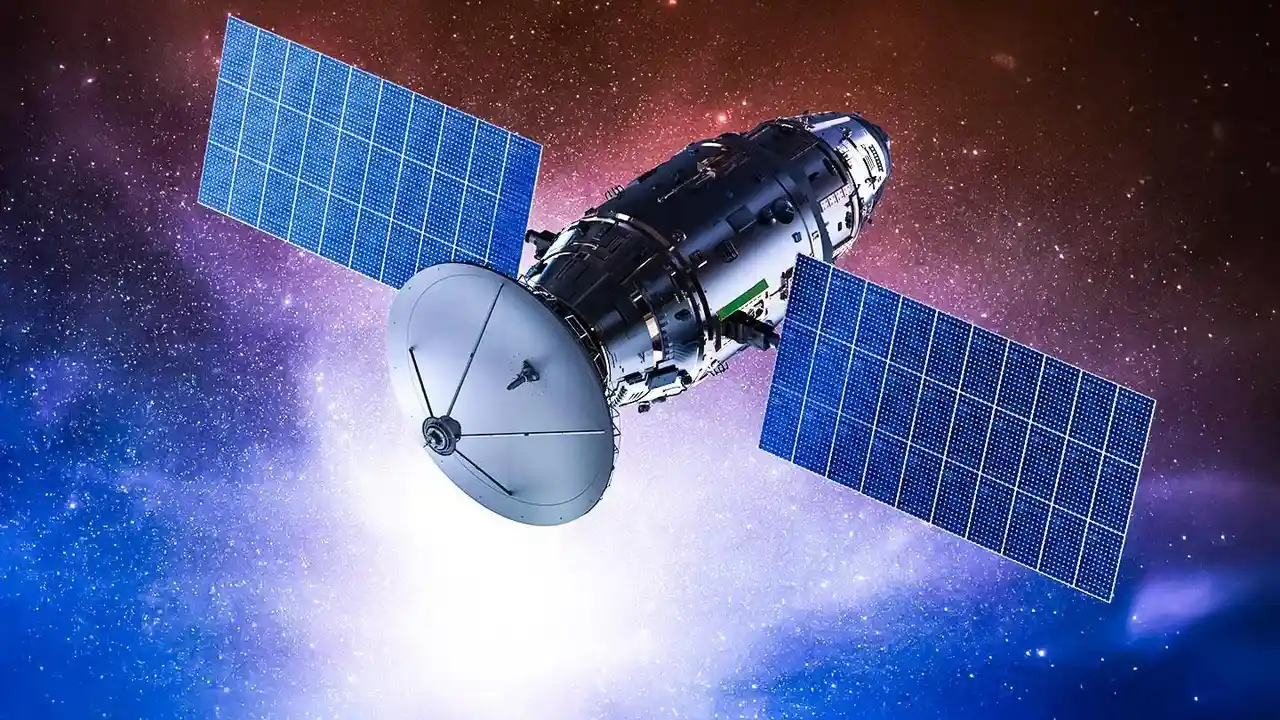
To better understand this cosmic dust, NASA is funding a mission called PUFFINS. The name is an acronym for 'Polarimetry in the Ultraviolet to Find Features in INterStellar dust'. Led by a team at the University of Arizona, this mission will use a small satellite, or 'SmallSat', equipped with a specialized 10-inch telescope. Scheduled for a 2030 launch, PUFFINS will orbit the Earth and observe the light from at least 70 different stars. The mission's primary goal isn't to look at the stars themselves, but at how their light is changed by the dust it passes through on its long journey to us. This will give scientists an unprecedented look at the smallest and most mysterious dust grains—those smaller than a virus.
The Power of Polarimetry
The key technique PUFFINS will use is called ultraviolet spectropolarimetry. It might sound complex, but the idea is straightforward. Light travels in waves, and polarization describes the direction in which these waves are vibrating. As starlight travels through space, it encounters clouds of interstellar dust. Certain types of elongated dust grains align themselves with the galaxy's magnetic field, acting like microscopic polarizing filters. When starlight passes through these aligned grains, its own polarization is altered. By measuring these tiny changes in the ultraviolet spectrum—a technique that hasn't been deployed in space for this purpose in nearly three decades—PUFFINS can deduce the dust's composition, size, and shape. This allows scientists to study the dust indirectly by analyzing the 'imprint' it leaves on the light.
Solving a Decades-Old Mystery
Previous missions in the 1990s provided a tantalizing but incomplete glimpse into ultraviolet polarization, observing only about 30 stars. The data raised more questions than it answered, revealing strange and unexpected polarization behaviour that scientists still don't fully understand. For instance, the light from some stars was far more polarized in the UV spectrum than theories predicted, while a distinct absorption feature known as the '2175 Å bump' was sometimes polarized and sometimes not. With its ability to observe more than double the number of targets with modern technology, PUFFINS aims to gather the data needed to finally solve these long-standing puzzles. According to the mission's science principal investigator, B-G Andersson, it's a chance to 'fully solve what for 50-plus years was the second-longest-standing mystery of interstellar medium physics'.
From Dust Grains to Habitable Worlds
Understanding the properties of these tiny grains isn't just an academic exercise. It has profound implications for the biggest questions in astrophysics. The composition and behaviour of dust directly influence how efficiently stars form within molecular clouds. The characteristics of this dust also determine the raw materials available for building planets, including rocky worlds like our own. The insights from PUFFINS will refine our models of star and planet formation and provide crucial context for future observatories. In fact, PUFFINS is seen as a critical stepping stone for NASA's future flagship Habitable Worlds Observatory, planned for the 2040s, by helping to define the science that a more advanced instrument could achieve.