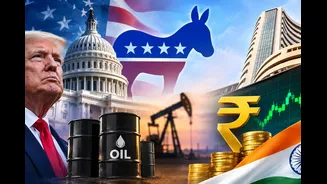






With the dust settling on the US midterm elections, the focus now shifts to Washington's new power dynamics. For businesses and investors in India, the key question is what this new political reality means for the vital US-India economic partnership.
A New Political Map in Washington
The 2026 midterm elections have delivered a significant political shift, with the Democratic Party reportedly gaining control of both the House of Representatives and the Senate. This creates a divided government, with a Democratic Congress poised to challenge the agenda of the Republican White House. For India, this outcome isn't just distant political news; it introduces new variables into the trade and investment equation. The result means more congressional oversight of the administration's policies, which could restrict the president's ability to unilaterally impose tariffs. While this might reduce some trade tensions, it also adds a layer of uncertainty for New Delhi.
Recalibrating Trade Negotiations
The new power balance in Washington is expected to alter the dynamics of India-US trade negotiations. Analysts suggest the White House, facing domestic political pressure, might be motivated to secure a quick foreign policy win, potentially accelerating talks for a trade deal with India. However, this urgency could come with tougher negotiating terms, with Washington possibly pushing harder for market access in sensitive Indian sectors like agriculture and dairy. Conversely, some reports indicate that the election results give India more breathing room, reducing pressure to accept unfavourable terms. An interim trade agreement, which doesn't require formal Congressional ratification, is unlikely to be directly affected, but the overall tariff structure remains subject to ongoing US investigations.
The View from Dalal Street
Indian markets reacted with cautious optimism. Immediately following the results, the Nifty 50 and Sensex saw gains, while the Nifty IT index experienced a drop. This divergence highlights investor confidence in the broader Indian economy, buoyed by factors like falling crude oil prices, but also shows concern for the tech sector, which is sensitive to US policy. A key factor is the potential for a weaker US dollar and easing Treasury yields, which could encourage foreign institutional investors (FIIs) to increase flows into Indian equities. However, analysts caution that while the election outcome provides a short-term positive sentiment, long-term market performance will depend on concrete policy decisions, corporate earnings, and global economic conditions.
Impact on Key Indian Sectors
The implications vary across different sectors of the Indian economy. The IT industry, a cornerstone of India-US trade, faces uncertainty. The sector saw stocks fall amid concerns over potential regulatory scrutiny and changes in US tech spending. However, some experts believe there could be relief on H_1B visa policies, which would be a positive for Indian IT companies. For manufacturing sectors like textiles, engineering goods, and electronics, the main concern remains tariffs and import rules. On the other hand, sectors like aviation, paints, and chemicals could benefit significantly from a potential decline in crude oil prices, which have already fallen to around $102 a barrel, partly on expectations of a new US approach to West Asia.
The Road Ahead for Bilateral Ties
While the midterm results introduce new complexities, the fundamental strategic alignment between India and the US is expected to endure. Both Republican and Democratic parties have shown a growing preference for economic nationalism and resilient supply chains, suggesting that a generally protective US trade posture will remain. The new Congress will likely increase scrutiny on any trade deal, ensuring it aligns with American interests, but the strategic imperative to collaborate, particularly as a counterbalance in the Indo_Pacific, remains strong. Indian officials and businesses will need to navigate a landscape where trade negotiations might speed up but also become more demanding.