







The Original Pacesetter: New Delhi to Varanasi
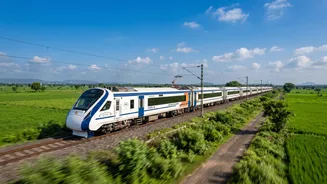
The inaugural Vande Bharat service remains one of the fastest and most prestigious routes in the entire network. Connecting the national capital with the spiritual heart of Varanasi, this train covers approximately 759 kilometres in just eight hours.
It operates at an impressive average speed of around 95 km/h, making it a benchmark for long-distance day travel in India. Launched in February 2019, this route proved the potential of semi-high-speed rail, cutting down the previous travel time by a significant margin and paving the way for the network's expansion. It serves as a vital link for pilgrims, tourists, and business travellers, showcasing how modern rail can serve diverse needs on a long-haul corridor.
The Speed King: Rani Kamalapati to Hazrat Nizamuddin
When it comes to top operational speed, the Rani Kamalapati (Bhopal) to Hazrat Nizamuddin (Delhi) route is a true champion. This service is notable for being the first to be cleared for a maximum operational speed of 160 km/h on the Tughlakabad-Agra section of its journey. While its overall average speed is slightly lower than the Delhi-Varanasi route due to track limitations elsewhere, it clocks in at a formidable 94 km/h. Covering about 700 kilometres in roughly seven and a half hours, it has drastically improved connectivity between Madhya Pradesh and the National Capital Region. This route is a prime example of how track upgrades and advanced trainsets can work together to achieve higher speeds.
Southern Speedster: Chennai to Coimbatore
Connecting two of Tamil Nadu's major industrial and textile hubs, the Chennai-Coimbatore Vande Bharat is a critical short-haul corridor that exemplifies efficiency. The train covers the 497-kilometre distance in under six hours, maintaining an impressive average speed of over 90 km/h. This service has been a game-changer for professionals who frequently travel between the two cities, offering a faster and more comfortable alternative to road and conventional rail. Its success highlights the demand for high-speed connectivity on shorter, economically significant routes, proving that Vande Bharat isn't just for epic cross-country journeys.
The Western Wonder: Mumbai to Gandhinagar
Linking India's financial capital with the capital of Gujarat, the Mumbai-Gandhinagar Vande Bharat is a powerhouse route in the west. It navigates one of the busiest commercial corridors in the country, covering the approximately 520-kilometre journey in about six hours and twenty minutes. The service provides a premium travel option for the heavy flow of business and leisure passengers between these two economic centres. By offering a fast, reliable, and modern travel experience, this train competes effectively with air and road travel, demonstrating its utility in a highly competitive, high-demand market.
A Pilgrimage in Record Time: Delhi to Katra
The second Vande Bharat Express ever launched, the New Delhi to Shri Mata Vaishno Devi Katra route, is a perfect blend of speed and service for a vital pilgrimage corridor. The train covers the 655-kilometre distance in eight hours, a significant reduction compared to other trains on the route. It provides a comfortable and swift journey for thousands of devotees travelling to the shrine. This route is an excellent example of a medium-to-long corridor where the Vande Bharat not only saves time but also enhances the overall travel experience for a specific, high-volume passenger segment.