






What Was the Maunder Minimum?
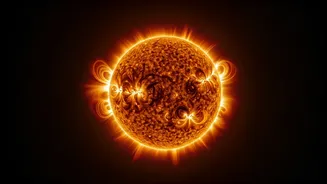
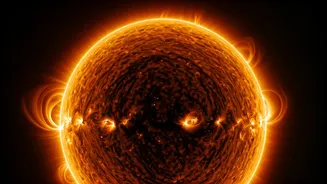
The Maunder Minimum was a mysterious period between 1645 and 1715 when the sun became strangely quiet. For about 70 years, astronomers observed an almost complete disappearance of sunspots—dark, cooler areas on the sun's surface that indicate magnetic
activity. In a typical modern span of three decades, we might see 40,000 to 50,000 sunspots. During a similar period within the Maunder Minimum, fewer than 50 were recorded. This prolonged lull in the sun's regular 11-year cycle of activity has fascinated scientists for centuries. It was named after astronomers Edward and Annie Maunder, who identified this quiet phase by studying historical records.
A Star With a Shifting Personality
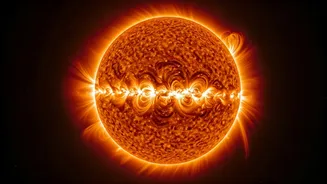
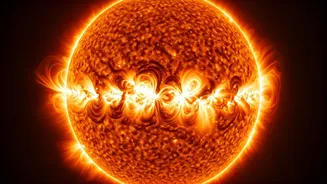
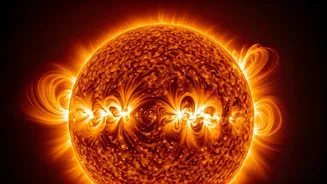
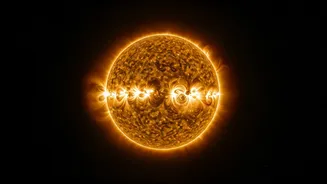
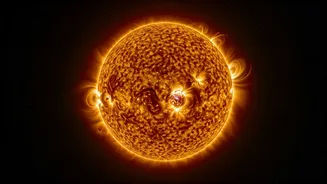
The sun is not a static ball of fire. It has a 'heartbeat' of sorts, an 11-year cycle where its magnetic activity waxes and wanes. During a solar maximum, the sun is turbulent, producing more sunspots, solar flares, and coronal mass ejections that can affect satellites and power grids on Earth. During a solar minimum, it becomes much calmer. However, the Maunder Minimum shows that the sun can depart from this script entirely, entering extended periods of profound quiet that scientists are still working to understand. These aren't just minor dips; they are fundamental, if temporary, shifts in the sun's behaviour that appear to happen periodically over millennia.
What 'Sudden Shift' Really Means
The headline's 'suddenly' doesn't mean the sun's activity changes overnight. In astronomical terms, a sudden shift can occur over a few years or a couple of decades, which is a blink of an eye in the sun's multi-billion-year lifespan. Some recent research, using a technique called helioseismology to study sound waves moving through the sun's interior, has found evidence of systematic changes in the solar cycle over the last 40 years. One study suggests that with each new cycle, the sun's magnetic activity is becoming more confined to shallower regions below its surface. This points to an evolving internal structure that we are only just beginning to detect, suggesting the sun might be entering a different mode of behaviour.
Connection to Earth's Climate
The Maunder Minimum famously coincided with the 'Little Ice Age,' a period when parts of the Northern Hemisphere experienced bitterly cold winters. For instance, the River Thames in London froze over, an event captured in historical paintings. This has led to speculation that a quiet sun causes a colder Earth. However, most climate scientists are cautious. The Little Ice Age began before the Maunder Minimum, and its primary cause is now believed to be a period of increased volcanic activity, which can block sunlight. While a significant drop in solar output could have a cooling effect, models suggest it would be small—perhaps a reduction of about 0.1 to 0.3°C. This would not be enough to offset the warming trend from human-caused greenhouse gas emissions.
Could It Happen Again?
Scientists actively debate whether the sun could enter another grand minimum like the Maunder event. There have been other, less dramatic quiet periods, such as the Dalton Minimum from 1790 to 1820. Studies of long-term solar history suggest the sun might spend up to a quarter of its time in these minima. Just over a decade ago, after a prolonged solar minimum in 2008, some scientists thought we might be entering another long lull. However, the sun's activity has since rebounded, surprising many researchers. This unpredictability is precisely why studying events like the Maunder Minimum is so critical. Understanding the sun's past is our best tool for anticipating its future and its potential impacts on our technology-dependent world.