







The Rise of Automation and Workplace Anxiety
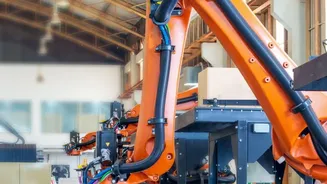
The conversation around artificial intelligence has shifted from futuristic fantasy to a present-day reality for millions of workers. Reports from global bodies like the World Economic Forum and NASSCOM suggest a significant percentage of jobs, particularly
those involving routine and repetitive tasks, are at risk of automation. This technological wave is reshaping industries from manufacturing to IT, where back-end tasks and customer service roles are increasingly being handled by sophisticated algorithms. This has created a widespread sense of uncertainty, as both blue-collar and white-collar workers question the long-term security of their careers in an increasingly automated world. The key concern is that as machines become more capable, the roles traditionally performed by humans will shrink, leading to significant job displacement.
The Irreplaceable Human Touch
However, the narrative of mass job loss isn't the full story. A growing body of research highlights that jobs requiring uniquely human skills are proving remarkably resilient. Automation excels at structured, predictable tasks, but struggles with roles that demand complex problem-solving, emotional intelligence, creativity, and physical adaptability in unpredictable environments. This is where the tourism and hospitality sector shines. The core of hospitality is not transactional; it's experiential. The ability to make a guest feel seen, to handle a complaint with empathy, or to create a memorable experience are skills that machines cannot currently replicate. This human element is the industry's greatest defence against complete automation.
Why Hotels and Restaurants Remain Human-Centric
In hotels and restaurants, AI is already being used to streamline operations. Automated systems can handle bookings, manage pricing, and answer routine guest questions. This frees up human staff from mundane tasks, allowing them to focus on what truly matters: the guest experience. Roles like a hotel concierge, an event planner, or a restaurant manager require a level of nuanced judgment and interpersonal skill that is beyond the scope of AI. They must read social cues, adapt to unexpected situations, and provide a personalised touch. Similarly, while robots may feature in some kitchens, the creativity and artistry of a chef, or the intuitive service of an experienced waiter, remain firmly in the human domain. These roles are less about following a script and more about improvisation and connection.
The Human Element in Transportation
The conversation about automation in transport is often dominated by self-driving vehicles. While this will undoubtedly impact roles like truck and taxi drivers, the tourism transport sector is more complex. A tour bus driver, for instance, is also a guide, a storyteller, and a problem-solver who manages the experience for a group of people. Roles like tour guides, travel coordinators, and even scuba diving instructors rely on deep knowledge, safety-critical judgments, and the ability to engage with people in dynamic, real-world settings. AI can optimise a route, but it cannot share a local legend with passion or ensure a group feels safe and cared for during an excursion.
Implications for India's Growing Job Market
For a labour-abundant country like India, this trend is particularly significant. The tourism and hospitality sector is a major employer and has immense potential for growth. While India faces the challenge of potential job displacement in sectors like IT and manufacturing, the resilience of tourism jobs offers a promising avenue for employment. The OECD has highlighted AI's potential to foster a more innovative and sustainable tourism economy, especially for the small and medium-sized enterprises (SMEs) that dominate the sector in the Asia-Pacific region. By focusing on developing the 'human-centric' skills that are resistant to automation, India can position its workforce to thrive. This involves a shift in focus from purely technical training to cultivating soft skills like communication, critical thinking, and emotional intelligence.