





The world's wealthiest are disproportionately responsible for the carbon emissions driving climate change, yet it is the poorest who bear the brunt of the suffering. A startling new report from Oxfam lays bare this profound injustice.
The Polluting Elite
According to Oxfam's
latest 'Disaster Divide' report, the numbers paint a picture of extreme inequality. The richest 0.1% of the world's population, a group of about 8 million people, produce more carbon emissions than the poorest 3.5 billion people combined. This is not just a marginal difference; it's a chasm that separates those whose lifestyles fuel the crisis from those who face its daily consequences. The report highlights that the annual emissions of the world's richest 1% are on track to cause an estimated 1.9 million excess deaths from heat, with a vast majority of these deaths occurring in low and lower-middle-income countries. This disparity is driven by what the report terms 'extreme carbon inequality', where the consumption habits, investments, and travel of the super-rich, including the use of private jets, have an outsized impact on the planet.
The Geography of Suffering
While wealth can shield the affluent from the worst effects of climate change, poverty dramatically increases vulnerability. The Oxfam report finds that deaths from flooding are seven times higher in more unequal countries. When extreme weather hits, those with the least resources are left exposed. They lose their homes, their livelihoods, and their ability to feed their families, with little to no safety net to aid recovery. Regions in the Global South, including Sub-Saharan Africa and parts of South Asia, are experiencing more intense and frequent droughts, floods, and storms. These are the very regions that have contributed the least to historical emissions. For instance, the United States alone is responsible for a larger share of historical emissions than any other country, yet nations in the climate-vulnerable Global South suffer disproportionately.
India's Precarious Position
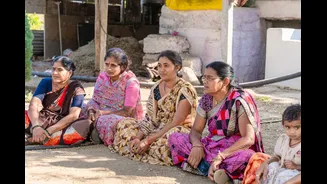
For India, this global disparity has direct and severe implications. The nation faces a complex 'double burden'. On one hand, as a developing country with a massive population, its total emissions rank third globally. On the other hand, its per-capita emissions are significantly lower than those of developed nations like the US and even below the global average. This means the average Indian has a far smaller carbon footprint than their counterpart in the developed world. Yet, India is acutely vulnerable to climate impacts. From the increasingly erratic monsoons that lead to devastating floods in states like Assam and Kerala, to the deadly heatwaves across the northern plains and the threat of rising sea levels to coastal cities like Mumbai and Kolkata, the consequences are already a part of daily life for millions. These disasters disproportionately affect marginalised communities, including farmers, Dalits, and Adivasis, who have the fewest resources to adapt or rebuild.
Profiting from the Crisis
The report uncovers another disturbing layer to the inequality: the super_rich are not only causing the crisis but are also finding ways to profit from it. Oxfam points to a booming 'adaptation economy', where investments in disaster preparedness, recovery, and reconstruction services are creating financial returns for the wealthy. This creates a perverse incentive where those most responsible for the damage can benefit from the subsequent clean_up, selling solutions back to a world they helped destabilise. The report argues this creates a vicious cycle: inequality fuels the climate crisis, and the climate crisis, in turn, deepens inequality.
A Call for Climate Justice
In the face of these findings, Oxfam is calling for systemic change rooted in the principle of climate justice. The recommendations include making rich polluters pay for the damage they've caused. This could take the form of progressive wealth taxes, levies on luxury carbon consumption like private jet travel, and stricter regulations on corporations to cut their emissions. The revenue generated from these measures could then be used to fund a just transition to renewable energy and to help vulnerable communities adapt to any new climate reality. The report's authors argue that recovery from climate disasters should not depend on wealth or power.