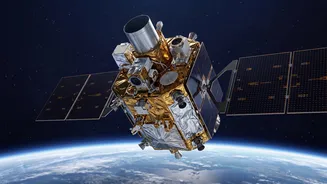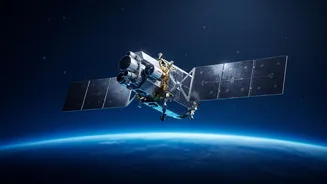




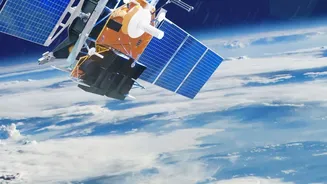

After 22 years of chasing cosmic explosions and rewriting our understanding of the universe, one of NASA’s most resilient space telescopes has taken its final bow. The Neil Gehrels Swift Observatory concluded its mission in a fiery descent on November
4.
A Fiery End to a Storied Mission
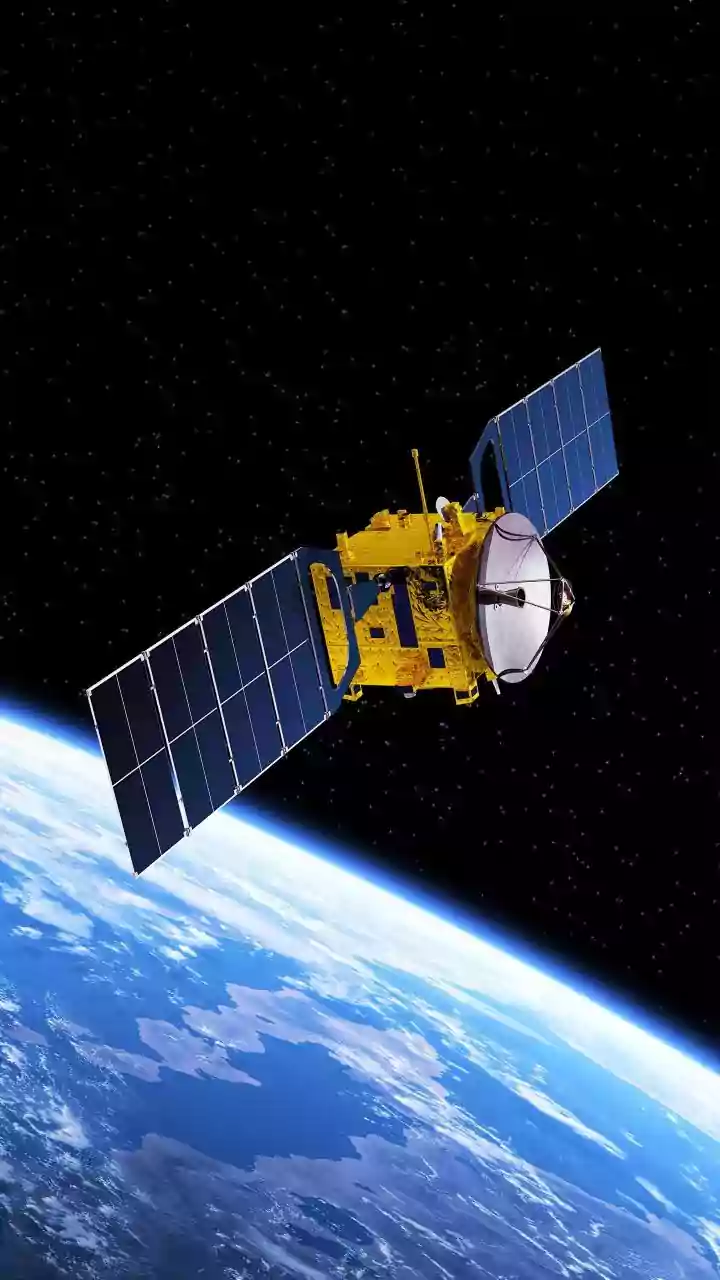
On November 4, 2026, the Neil Gehrels Swift Observatory re-entered Earth’s atmosphere over the North Sumatra region of Indonesia, bringing its nearly 22-year mission to a dramatic close. The U.S. Space Force confirmed the re-entry at 7:39 a.m. EST. The descent was the inevitable conclusion for the 1,450-kilogram observatory, which had been slowly losing altitude due to atmospheric drag. This drag was intensified in recent years by increased solar activity, which caused Earth's upper atmosphere to expand. Without an onboard propulsion system to boost its orbit, Swift's fate was sealed. While most of the spacecraft was expected to burn up, NASA acknowledged that some components might have survived the plunge.
The Daring Rescue That Wasn't
The end of the mission was not for lack of trying. In a high-stakes effort, NASA had contracted a private company, Katalyst Space Technologies, for a $30 million rescue mission. The plan was for a robotic spacecraft called LINK to grapple Swift and push it into a higher, more stable orbit, potentially extending its life by a decade. The LINK spacecraft launched in July 2026, but the unprecedented mission faced technical difficulties. Attitude control problems caused the LINK servicer to spin, preventing it from safely approaching and docking with the observatory. After the ambitious rescue attempt failed, NASA officially terminated Swift’s science operations on October 20, 2026, as it dipped to an altitude where it could no longer steadily point its telescopes.
An Agile Hunter of Cosmic Explosions
Launched on November 20, 2004, the Swift Gamma-Ray Burst Explorer was designed for a two-year mission. Its purpose was to solve the mystery of gamma-ray bursts (GRBs), the most powerful explosions in the universe. The observatory lived up to its name, which refers not to an acronym but to its incredible speed. When its main instrument detected a GRB, the spacecraft could automatically pivot its X-ray and ultraviolet/optical telescopes to the source in about a minute. This rapid-response capability allowed scientists, for the first time, to study the fading afterglow of these fleeting events across multiple wavelengths, providing crucial data on their origins. Swift demonstrated that longer bursts come from the collapse of massive stars, while short bursts often result from the merger of dense objects like neutron stars.
A Legacy Beyond Gamma-Rays
While designed to hunt GRBs, Swift’s versatility made it a multi‐purpose tool for the entire astronomical community. Over its two decades in space, the observatory far exceeded its original mandate. It became a crucial 'target of opportunity' observatory, studying a vast range of celestial events. Swift observed more than 1,400 supernovae, sometimes catching the very first light of the stellar explosions. It witnessed stars being torn apart by black holes, monitored comets and asteroids in our own solar system, and helped create an all‐sky survey in high‐energy X‐rays. The data collected by Swift has contributed to thousands of scientific papers, fundamentally changing our understanding of the dynamic and transient universe.