






An Ancient, Unseen Map
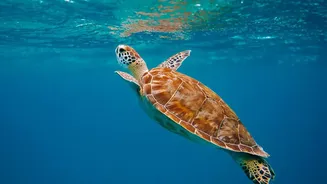
Every year, a miracle unfolds on India's eastern coastline. Thousands of Olive Ridley sea turtles travel across the enormous expanse of the Indian Ocean to arrive on the very beaches where they were born. This epic journey, often spanning thousands of kilometres
and taking place decades after they first scuttled into the sea, is one of nature's most profound mysteries. It’s a phenomenon known as natal homing, and it’s not unique to turtles. Birds, salmon, and even insects perform similar feats of incredible navigation, seemingly guided by an internal GPS. For years, scientists have theorised that these animals are tapping into an invisible force: the Earth’s magnetic field. Now, research centred on Odisha’s coast is providing some of the clearest evidence yet of how this remarkable biological system works.
Odisha’s Unique Coastal Laboratory
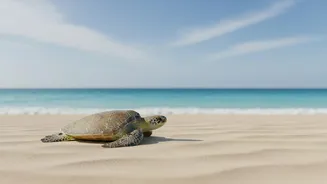
Odisha's coastline, particularly the beaches at Gahirmatha and the Rushikulya river mouth, serves as the world's largest mass nesting site for Olive Ridley turtles. This annual event, known as the 'arribada', sees hundreds of thousands of female turtles arriving in a synchronised wave to lay their eggs. This natural spectacle makes the region an unparalleled living laboratory for studying animal navigation. The strong fidelity to these specific sites suggests the turtles are locking onto a unique signal. Scientists believe that each part of the Earth's coastline has a distinct magnetic 'signature' or address, created by tiny variations in the planet’s magnetic field. Odisha’s coast appears to have the perfect combination of magnetic, geographic, and environmental conditions that have drawn generations of turtles back, year after year.
Cracking the Magnetic Code
The leading theory, supported by recent findings, is called geomagnetic imprinting. Researchers believe that when hatchlings emerge from their nests and make their crucial first journey to the water, their brains record the unique magnetic signature of their birth beach. This isn't like memorising a visual landmark; it's about storing data on the magnetic field's intensity and inclination angle. This 'magnetic address' is then stored for 15 to 20 years. When the turtles reach maturity in distant feeding grounds, they rely on this imprinted information to navigate back. This internal compass allows them to orient themselves in the featureless open ocean, and the magnetic map helps them identify their destination region with astonishing accuracy.
From Open Ocean to Exact Beach
Magnetic navigation gets the turtles into the right neighbourhood, but it's not the only tool they use. Recent studies suggest a multi-stage process. Once the turtles approach the coastline, guided by the magnetic map, they switch to using a suite of other local cues. They can sense the direction of ocean currents, temperature gradients, and even the chemical signatures created by freshwater from rivers like the Rushikulya flowing into the sea. In the final phase, the slope of the beach, the texture of the sand, and the underwater geography all help them pinpoint the perfect nesting spot. It's a sophisticated system that combines a long-range global map with highly sensitive short-range senses. To better understand these journeys, researchers in Odisha have revived satellite tagging programs, fitting turtles with transmitters to track their precise movements in near real-time.
Why This Discovery Matters
Understanding how these ancient mariners navigate is more than just solving a scientific puzzle. It has profound implications for conservation. As coastal development, shipping traffic, and artificial light pollution increase, these navigational cues can be disrupted. Satellite tracking data helps identify critical migration corridors and foraging grounds that need protection. Furthermore, climate change poses a threat by potentially altering ocean currents and beach structures, which turtles rely on for the final leg of their journey. By decoding how turtles find their way home, conservationists can better protect not just the nesting sites in Odisha, but the entire invisible network of pathways they use across the ocean. Preserving these beaches means maintaining the very environmental signals that these creatures have learned to recognise over millennia.