




Why Your Plant Leans
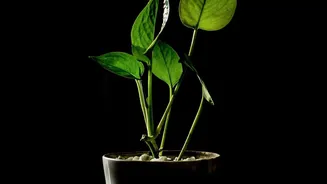
The phenomenon of a plant bending toward a light source is called phototropism. It's a clever survival strategy. Plants use light for photosynthesis, the process of creating food for energy and growth. To maximize this process, they will physically orient
themselves toward the strongest light source available. This is controlled by hormones called auxins, which accumulate on the shaded side of the stem. These auxins stimulate the cells on the darker side to grow longer and faster, causing the plant to bend in the direction of the light. While brilliant for the plant's survival, it can result in a lopsided, less aesthetically pleasing appearance in your home, with more foliage on one side and thinning, yellowing leaves on the other.
The Simple Rotation Routine
The easiest and most effective way to combat one-sided leaning is to establish a consistent rotation routine. The most common recommendation is to give your plant a quarter-turn every one to two weeks. A simple way to remember this is to rotate the pot a quarter-turn each time you water it. This practice ensures that all sides of the plant receive relatively equal light exposure over time, encouraging the stem to grow straight and promoting balanced, symmetrical foliage. There's no need to worry about stressing the plant; this gentle turning doesn't disturb the root system and helps it develop a stronger, more even structure. For a plant that already has a significant lean, you can turn it 180 degrees so the shaded side faces the light, which will encourage it to straighten out over several weeks.
Location, Location, Location
While rotation is key, the plant's initial placement plays a huge role in its growth habits. Understanding your home's light is the first step. South-facing windows offer the most intense, direct light, while north-facing windows provide the least. East-facing windows get gentler morning sun, and west-facing windows receive more intense afternoon light. Most common tropical houseplants thrive in bright, indirect light—the kind of light found near an east-facing window or a few feet back from a south-facing one. Placing a light-loving plant too far from a window will almost guarantee a severe lean as it stretches for energy. Research your specific plant's needs and place it in a spot where it gets the appropriate amount of light from the start.
When Rotation Isn't Enough
In some homes, especially during darker winter months or in rooms with few windows, natural light may not be sufficient to prevent leaning or 'leggy' growth, where stems become long and sparse. This is where supplemental grow lights become a valuable tool. Modern LED grow lights are energy-efficient and can provide the full-spectrum light that plants need for photosynthesis. For best results, position the light 6 to 12 inches above the plant and leave it on for 10 to 14 hours a day to mimic a natural light cycle. If a grow light is placed directly above the plant, providing even overhead coverage, the need for rotation is often eliminated.
Providing Extra Support
For plants that are already severely lopsided or for vining species that naturally climb, providing physical support is a great solution. A bamboo cane or a moss pole inserted into the pot gives the plant a structure to hold onto. You can gently tie the leaning stem to the support using soft plant ties. This not only helps straighten the plant but also encourages upward growth, mimicking how climbing plants like Monsteras use trees for support in their natural habitat. Combining this physical support with a proper light and rotation routine will help correct even the most dramatic leans and train your plant to grow straighter and stronger over time.