







A Trillion-Dollar Tech Reshuffle
According to the latest forecast from research firm Gartner, worldwide IT spending is set to climb to a record $6.37 trillion in 2026, marking a significant 14.2% increase from the previous year. While growth is visible across the board, the distribution
of that spending reveals a dramatic pivot. The era of incremental upgrades to software and devices is being overshadowed by a far more fundamental and costly endeavour: building the physical backbone for the age of artificial intelligence. This isn't just another budget cycle; it's a global, industry-wide reallocation of capital towards the core infrastructure needed to power the next generation of computing.
Unpacking the 62.5% Data Centre Boom
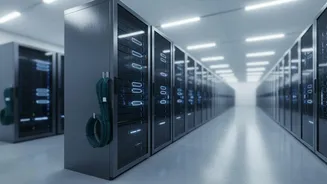
The headline figure from Gartner's report is the unprecedented 62.5% year-over-year explosion in spending on data centre systems, projected to jump from $506 billion in 2025 to $822 billion in 2026. This segment is now the fastest-growing category in all of technology, and the reason can be summed up in two letters: AI. As one Gartner analyst put it, “Building the compute capacity required for AI is the largest infrastructure project ever attempted by humanity.” Companies, from giant hyperscalers like Google and Microsoft to large enterprises, are in an arms race to build out the capacity needed for training and running complex AI models. This spending covers everything from high-performance servers packed with GPUs to the networking equipment, power systems, and cooling solutions required to keep them running.
AI’s Insatiable Appetite for Power and Hardware
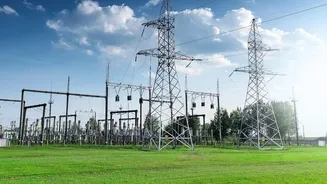
Unlike traditional computing workloads that have predictable peaks, AI training and inference can run at maximum capacity for weeks or months, demanding continuous, high-density power. An AI-optimised server consumes significantly more energy than a conventional one, driving not just hardware sales but also a surge in electricity demand that is straining power grids globally. In fact, Gartner predicts that by 2027, the power consumption of AI-optimised servers will surpass that of all conventional servers combined. This reality is forcing a fundamental redesign of data centres, moving towards advanced liquid cooling systems and placing an unprecedented premium on access to reliable power, which has now become a primary constraint on growth.
A Clear Shift in Spending Priorities
To understand the scale of this shift, consider how data centre growth compares to other major IT segments. While data centre spending is set to skyrocket by 62.5%, growth in other areas is far more modest. Spending on IT services is forecast to grow by just 5.3%, while the devices market will see a 9.8% lift. Even the robust software and cloud infrastructure (IaaS) segments, with growth of 15.5% and 29.3% respectively, are completely eclipsed by the data centre build-out. The message from the market is clear: for now, the most critical investment in technology is not in the apps on our phones, but in the massive, power-hungry buildings that make them intelligent.
What This Means for India's Digital Future
This global trend is strongly mirrored in India, which is in the midst of its own data centre gold rush. A recent report from Wood Mackenzie projects that India's operational data centre capacity will increase more than five-fold by 2030, driven largely by AI adoption and hyperscale cloud investments. This expansion is no longer confined to traditional hubs like Mumbai and Chennai. Investment is pouring into emerging markets such as Telangana, Uttar Pradesh, and Karnataka as developers follow available power and land. Supported by government initiatives like the IndiaAI Mission, the country is positioning itself as a key backbone for the world's AI infrastructure. This boom creates immense opportunities for India's technology sector, from construction and engineering to the skilled professionals needed to manage these advanced facilities.