





An Asymmetric War of Attrition
The core of Russia's strategy is a stark economic imbalance. Moscow is deploying waves of Iranian-designed Shahed-type drones, which are relatively simple and cheap to produce, with estimates placing their cost between $20,000 and $50,000 each. In response,
Ukraine is often forced to use sophisticated surface-to-air missiles from systems like the Patriot, where a single interceptor can cost several million dollars. This creates a severe cost disadvantage, where Ukraine might spend exponentially more to neutralize a threat than Russia spends to create it. This is not just combat; it is economic warfare, aimed at draining Kyiv's and its allies' financial and military resources over the long term.
Overwhelming the System
The sheer volume and coordination of the attacks are designed to overwhelm Ukraine’s air-defence network. Russia frequently launches hundreds of drones in combined waves, often alongside more dangerous cruise and ballistic missiles. This tactic, described by analysts as creating saturation, serves multiple purposes. It forces Ukrainian defenders to expend limited and precious interceptor missiles on low-cost drones, potentially allowing more advanced missiles to slip through. It also compels air-defence crews to reveal their locations, making them vulnerable to follow-up strikes, and stretches their personnel and equipment to their breaking point.
The Strain on Interceptor Capacity
The constant barrage places an immense strain on Ukraine's stockpile of interceptors. While Ukraine has demonstrated remarkable success rates, sometimes intercepting over 90% of incoming drones, this success comes at a high cost. Each missile fired is one less available for a future, potentially more critical, engagement against a hypersonic or ballistic missile. Reports indicate that shortages of key interceptors, particularly for Patriot systems, are becoming a critical vulnerability. Russia’s strategy is a direct assault on this limited capacity, aiming to deplete Ukraine's magazine faster than it can be replenished by its Western partners. The goal is to create gaps in Ukraine's defensive shield that can be exploited.
Ukraine's Adaptation and Innovation
In response to this challenge, Ukraine has been forced to innovate rapidly. A key part of this is shifting to more cost-effective solutions for drone interception. Mobile fire groups, equipped with heavy machine guns and rapid-fire cannons, have become a crucial layer of defence, accounting for a significant percentage of drone shoot-downs. Furthermore, Ukraine is aggressively developing its own drone-on-drone warfare capabilities. Engineers are creating low-cost interceptor drones, some costing only a few thousand dollars, designed specifically to hunt and destroy Shaheds. This includes developing AI-driven swarm technology to counter Russia's swarms, fighting fire with fire in a bid to level the economic playing field.
The Strategic Long Game
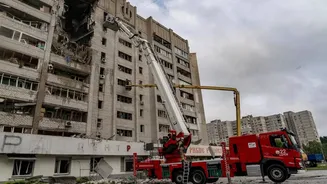
Ultimately, Russia's drone campaign is a key component of a long-term strategy of exhaustion. By continuously attacking civilian infrastructure and population centres, Moscow aims to degrade Ukraine's economy, damage morale, and force the government to allocate defensive resources away from the front lines. The drone swarms are a cheap, scalable, and effective tool in this coercive campaign. They ensure that even when Ukraine is not facing a major ground offensive, its military and civilian population are under constant pressure. The battle in the skies is therefore not just about intercepting individual drones; it is a race for industrial capacity, financial endurance, and technological adaptation that will be critical in shaping the future of the conflict.