






The Planet's Invisible Highways
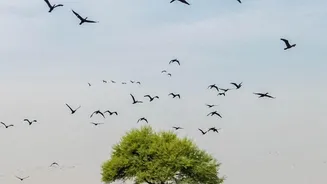
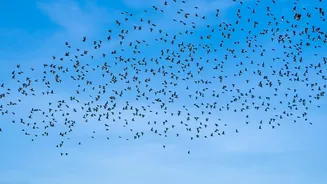
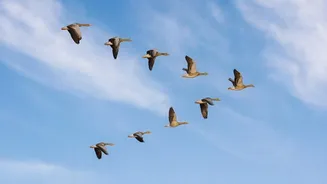
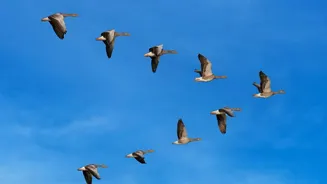
Bird migration is one of nature's most impressive feats. Twice a year, countless birds travel between breeding and wintering grounds, sometimes covering thousands of kilometres. These journeys are not random; they follow specific routes known as flyways.
A flyway is like a superhighway in the sky, a vast geographical region encompassing the routes of numerous migratory bird species. The world has nine major flyways, which are essential for the survival of these birds, providing critical stopover sites where they can rest and refuel. These pathways connect ecosystems across continents, making migratory birds vital indicators of global environmental health. When these flyways are healthy, so are the environments they connect. But when a link in that chain breaks, the entire system is threatened.
An Alarming Global Assessment
Recent global assessments paint a troubling picture for these incredible travellers. Reports, including updates to the State of the World's Birds, reveal that a significant percentage of migratory bird species are in decline. One recent review found that approximately 51% of migratory bird species are decreasing globally. The primary drivers of this decline are a combination of factors, many of them human-induced. Habitat loss and degradation are the most significant threats. Wetlands are drained for agriculture and urban expansion, forests are cleared, and grasslands disappear, leaving birds with fewer places to rest, feed, and breed. Climate change is also a major culprit, altering weather patterns, disrupting migration timing, and causing extreme events that can be fatal for birds on their long journeys. Other serious threats include pollution, collisions with infrastructure like power lines and wind turbines, and illegal hunting.
India's Critical Crossroads: The Central Asian Flyway
For India, this is not a distant problem. The country is a crucial part of the Central Asian Flyway (CAF), a migration route that stretches from the northernmost breeding grounds in Siberia and the Arctic to the wintering grounds in West Asia, the Indian subcontinent, and beyond. The CAF covers 30 countries and is used by at least 182 waterbird species, including 29 globally threatened species. Many birds that people across India recognise, from the high-flying Bar-headed Goose that soars over the Himalayas to the Amur Falcon which arrives in the Northeast, depend on this flyway for their survival. India's vast network of wetlands, grasslands, and coastal areas provides essential wintering grounds and stopover sites for these birds, making the nation's conservation efforts pivotal to their survival. However, long-term data indicates that around 60% of bird species in India have shown a decline over the last 30 years, with migratory species being particularly hard-hit.
Local Threats on a Global Pathway
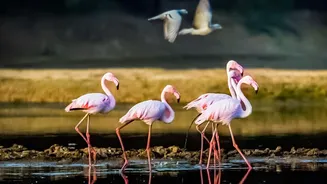
The threats outlined in global reports are intensely felt within India. The degradation of wetlands is a primary concern. Once considered havens, many lakes and marshes are now threatened by encroachment, pollution from untreated sewage, and agricultural chemical runoff, which damages the birds' feeding grounds. Uncontrolled urban sprawl and infrastructure development also take a toll. Power lines pose a significant collision and electrocution risk, while improperly planned wind farms can be deadly for migrating flocks. In some regions, illegal hunting and trapping using mist nets still poses a significant threat, capturing birds during their vulnerable stopover periods. The combined pressure of these local threats along a crucial international flyway creates a perilous journey for birds that have been making these trips for millennia.
A Coordinated Call to Action
The challenge of protecting species that cross multiple international borders is immense, but it is not insurmountable. Conservation reports stress the need for international cooperation across entire flyways, as actions in one country can be undone by inaction in another. In response, India has launched a National Action Plan for the Conservation of Migratory Birds along the Central Asian Flyway. This plan aims to monitor populations, protect critical habitats, and mitigate threats. Success hinges on a multi-pronged approach: strengthening the protection of key wetland sites, making infrastructure 'bird-safe', tackling illegal hunting, and involving local communities in conservation. Grassroots efforts have already shown success in areas like Manipur with the Amur Falcon and in Gujarat with the Grey Hypocolius, proving that targeted local action can have a powerful impact.