

The Soul of a City in a Bowl
Ghugni is an integral part of Kolkata's culinary identity, a beloved staple enjoyed from morning till night. At its core, it's a deceptively simple dish made from dried yellow or white peas (motor), soaked overnight and simmered into a hearty, spiced
stew. Traditionally served hot in eco-friendly 'shaal' leaf bowls, it’s the kind of food that fuels the city's soul. Whether grabbed as a quick breakfast on the way to work, enjoyed as a leisurely evening snack, or featured in festive spreads during Bijoya Dashami, Ghugni is a thread woven deeply into the fabric of Bengali life. But to assume all Ghugni is the same is to miss the magic that happens at the street-side stalls.
The Classic Canvas: Niramish Ghugni
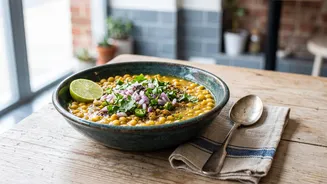
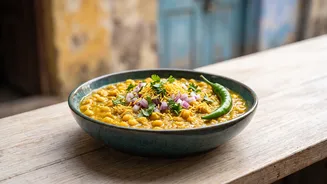
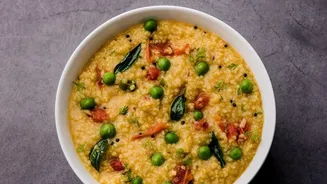
The foundation for all innovation is the classic 'Niramish' or vegetarian Ghugni. This version, often prepared without onion or garlic, is a masterclass in balanced flavour. The peas are cooked until tender but not mushy, swimming in a gravy fragrant with ginger, turmeric, and cumin. Some vendors add chunks of potato to thicken the consistency. The defining flavour often comes from a final sprinkle of 'bhaja mosla', a quintessential Bengali roasted spice mix of ingredients like cumin, coriander, and dried red chillies that adds a smoky, aromatic depth. This classic preparation is the blank slate upon which Kolkata's street vendors paint their masterpiece.
The Meaty Masterpiece: Mangsher Ghugni
Perhaps the most celebrated and decadent evolution is Mangsher Ghugni, the non-vegetarian version. Here, the humble pea curry is elevated with the addition of mutton. Some vendors stir in rich, flavorful mutton keema (minced meat), while others add tender, bite-sized pieces of mutton that have been slow-cooked until they fall apart. The fat from the meat, sometimes added as 'chorbi', seeps into the gravy, creating a profoundly rich and savoury experience that transforms the snack into a substantial meal. This hearty rendition is a favourite for those seeking something more indulgent and is a testament to the city’s love for complex, robust flavours.
A Symphony of Toppings
The true signature of a vendor's Ghugni lies in the final flourish of toppings—a personalised palette of textures and tastes. A generous handful of sharp, crunchy raw onion and fiery chopped green chillies is almost mandatory. From there, the customisation begins. Some stalls add delicate, fried slices of coconut for a sweet crunch, while others might crumble a hard-boiled egg on top. A tangy counterpoint is often provided by a drizzle of tamarind water or a squeeze of fresh lime. To complete the 'chaat' experience, you might find a sprinkling of savoury sev, crushed papdi, and freshly chopped coriander, turning each bowl into a multi-layered explosion of flavour.
The Unsung Innovators
Beyond the more common variations, each street corner might hide a vendor with a secret touch. One might add a dollop of butter at Gariahat Market, letting it melt into a golden pool on the hot Ghugni. Another at Vardaan Market might serve it with a baked kulcha, borrowing from North Indian traditions. Some vendors are known for their specific chutneys, be it a sweet-and-sour tamarind or a fiery coriander-mint blend that sets their Ghugni apart. This constant, subtle innovation is not a gimmick; it’s a reflection of personal history and pride, a quiet conversation between the vendor and the city they feed. Each twist, no matter how small, is a signature, making a trip for Ghugni an endless journey of culinary discovery.