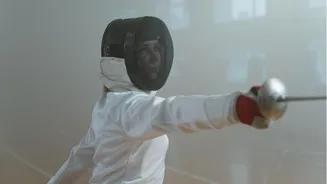









In a world that constantly pulls for our attention, the search for focus and stillness is universal. Two ancient disciplines, yoga and archery, offer surprisingly similar solutions through very different methods. This is a tale of two paths to one goal.
Two Practices, One Goal
On the surface, yoga and archery seem worlds apart. One is a practice of internal, flowing movement often performed in a quiet studio; the other is a sport of external precision, requiring an arrow to meet a distant target. Yet, at their core, both are profound exercises in achieving a state of harmony between mind and body. They demand presence, stability, and an unwavering focus that silences external and internal noise. For the yogi balancing in Tree Pose or the archer at full draw, the ultimate challenge isn't just physical; it's about conquering the distractions of the mind to find a moment of perfect stillness.
The Nature of Focus: Internal vs. External
The most significant difference between the two lies in the direction of focus. Yoga, particularly in balance poses, cultivates an 'internal' focus. The practitioner's awareness is drawn inward, sensing the subtle shifts in muscles and alignment needed to maintain stability. This process builds proprioception—the body's ability to sense its own position in space. Conversely, archery is a masterclass in 'external' focus. While an archer must be aware of their body, their ultimate concentration is on the target. Their mind must project outward, connecting their intention to a specific point in the distance. This external target simplifies the mental task, allowing the body's trained movements to take over almost automatically. Both methods are effective for training concentration, but they engage the brain in fundamentally different ways.
The Role of the Breath
Breath is central to both disciplines, but its application highlights their different approaches. In yoga, the breath is typically continuous and rhythmic, like the Ujjayi or 'ocean' breath. This steady flow of breath anchors the mind in the present moment, calms the nervous system, and supports fluid movement between poses. In balance poses, a consistent breath helps maintain stability and concentration. Archery, however, utilizes a more punctuated breathing technique. An archer often inhales while raising the bow, exhales partially to settle into their anchor point, and then holds the remaining breath for the 5-8 seconds needed to aim and release. This brief hold minimizes the movement of the chest, creating a stable platform for the shot. While yoga uses breath to find flow, archery uses it to create a moment of absolute stillness.
The Experience of Balance
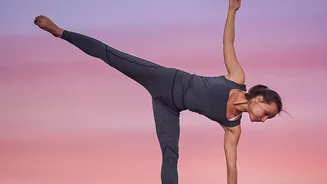
In yoga, balance is a dynamic conversation with gravity. As you hold a pose like Warrior III or Half Moon, your body is in constant, minute motion, with small muscles firing to make micro-adjustments. The mental challenge is to remain calm and focused amidst this instability, to embrace the wobbles as part of the process. It's a practice in finding your center while in a state of controlled flux. In archery, balance is more static and foundational. The archer's stance must be solid and rooted, a stable base from which to execute a powerful and precise upper_body movement. The focus is on eliminating movement, not managing it. The mental game here is about creating unwavering physical stability and trusting that foundation, so that the mind can be free to focus solely on the shot process.
Which Path Is Right for You?
Choosing between yoga and archery for mental focus depends on your personal disposition. If you are seeking to develop greater internal awareness and are comfortable with a practice that involves flowing movement and introspection, yoga may be a natural fit. It is a journey inward, teaching you to find peace within your own physical and mental landscape. If you are more goal_oriented and find focus through a clear, external objective, archery might be more appealing. It provides a tangible measure of success—the arrow hitting the target—and trains the mind to block out all distractions in pursuit of that single point of focus. It is a practice of external precision that builds internal discipline.