



The World's Most Important Waterway
The Strait of Hormuz is a narrow channel linking the Persian Gulf to the open ocean. At its narrowest point, it is only 29 nautical miles wide. This geography makes it one of the most strategic, and vulnerable, maritime chokepoints on the planet. Before
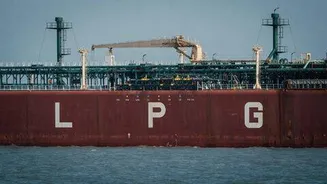
the current era of heightened conflict, an immense volume of global trade, primarily crude oil and liquefied natural gas (LNG), transited these waters daily. Producers like Saudi Arabia, the UAE, Kuwait, Iraq, and Iran all relied on this single route to get their energy to global markets. This concentration of shipping traffic turned the strait into a barometer for geopolitical tension; the stability of the global economy often depended on its safe passage.
A River of Black Gold
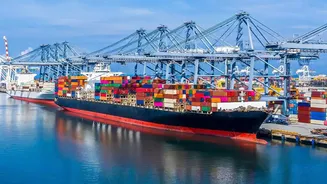
The numbers are staggering. In the years of relative stability, around 21 million barrels of oil passed through the strait every single day. This accounted for roughly one-fifth of the entire world's petroleum consumption and a third of all seaborne oil trade. In addition to oil, a significant portion of global LNG, mainly from Qatar, also made the journey. This massive, daily transfer of energy was the bedrock upon which post-war industrial expansion was built, particularly for the rapidly growing economies of Asia. The constant parade of supertankers was a physical manifestation of global energy interdependence, a system that worked so smoothly it was often taken for granted.
Fueling the Asian Century
The primary destinations for this river of oil were the booming economies of Asia. Countries like China, Japan, and South Korea became industrial powerhouses, in large part, because of this reliable and seemingly endless supply of Middle Eastern crude. In fact, nearly 90% of the crude oil and condensate flowing through Hormuz was destined for Asia. Japan, for instance, sourced a majority of its crude from the strait, while South Korea was similarly dependent. China, the world's largest oil importer, relied on Hormuz for roughly half of its foreign oil supplies. This energy flow powered their factories, lit their cities, and enabled hundreds of millions of people to enter the middle class.
India's Critical Energy Lifeline
For India, the world's third-largest oil consumer, the Strait of Hormuz was an indispensable economic lifeline. The nation imports around 85% of its crude oil needs, and in the period of stability, a huge portion of that—at times over 60%—came from Persian Gulf producers via the strait. This dependency made India particularly vulnerable to any disruption. The reliable transit of crude from suppliers like Iraq and Saudi Arabia was essential for producing the petrol, diesel, and aviation fuel that keep the Indian economy moving. Furthermore, over half of India's imported LNG, critical for power generation and fertilizer production, also transited the strait. While India has since made efforts to diversify its energy sources, the pre-war era highlights the deep structural reliance on this single maritime corridor.
A Fragile and Assumed Peace
This era of secure shipping did not exist in a vacuum. It was underpinned by a delicate security balance, historically guaranteed by international naval presences that deterred piracy and state-level aggression. Although tensions were a constant feature, as seen during the Iran-Iraq 'Tanker War' in the 1980s, a general understanding prevailed that keeping the commercial sea lanes open was in everyone's interest. Shipping companies paid higher insurance premiums, and naval coalitions conducted patrols, but the oil continued to flow. This period of fragile stability allowed Asian buyers to build their economies on the assumption that, whatever the political climate, the Hormuz chokepoint would remain open for business.