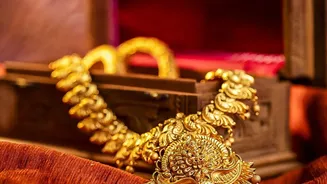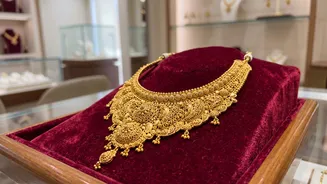







This Dhanteras, as you prepare to buy gold, look beyond the per-gram rate. The final price on your bill is shaped by several other factors, chiefly making charges. Here’s a detailed breakdown to help you shop smarter this festive season.
Understanding the Price Correction
Gold prices have
seen significant volatility in 2026. After hitting a record high of around ₹1,75,340 per 10 grams for 24-carat gold in late January, prices have undergone a sharp correction, falling nearly 22% from that peak. As of early November, just ahead of Dhanteras on November 6, 24-carat gold is trading in the range of ₹1,38,000 to ₹1,41,500 per 10 grams. While this is a significant drop from the January peak, it's still about 7-8% higher than the prices during Dhanteras 2025. This 'correction' offers some relief to buyers, but it's crucial to understand that the final price you pay will be higher after adding various charges.
What Are Making Charges?
Making charges are the fees you pay for the craftsmanship involved in turning raw gold into a piece of jewellery. This cost covers the labour of the artisans, the technology used, and the jeweller's overheads. These charges are not standardised and can vary significantly, from as low as 3% to as high as 35% or more of the gold's value. The complexity of the design is a major factor; simple, machine-made chains will have lower making charges, while intricate, handcrafted necklaces will command a much higher fee.
How Jewellers Calculate These Charges
Jewellers typically use one of two methods to calculate making charges. The first is a percentage of the value of the gold used. For example, on a ₹1,00,000 piece, a 15% making charge would add ₹15,000. The second method is a flat rate per gram of gold, such as ₹500 per gram. For a 10-gram item, this would add ₹5,000 to the bill. Because these charges aren't fixed across the industry, it's one area where you may have room to negotiate, especially on high-value purchases. Many jewellers also offer festive discounts specifically on making charges.
The Hidden Cost of 'Wastage'
Some jewellers include an additional fee called 'wastage' or 'wastage charges'. This accounts for the small amount of gold that is lost during the manufacturing process—for instance, as fine dust when cutting or polishing the metal. This charge can range from 5% to 7% of the gold's weight. However, modern jewellery-making techniques have reduced actual wastage, and many jewellers now bundle this cost into the making charges instead of listing it separately. Always ask for a clear breakdown and clarify if wastage is charged separately or is part of the making charges.
The Final Layer: Goods and Services Tax (GST)
After all other costs are calculated, the Goods and Services Tax (GST) is applied. The purchase of gold jewellery in India attracts a GST of 3% on the total value, which includes both the price of the gold and the making charges. Some jewellers may show a 3% GST on the gold value and a 5% GST on the making charges as a separate service, but the final impact on the consumer is broadly similar. Always ask for a detailed, itemised bill to see exactly how much GST you are paying.
Dhanteras 2026 Offers to Watch
This festive season, many major jewellers are offering significant discounts to attract buyers. These deals often focus on reducing making charges. For instance, Joyalukkas is offering a flat 50% off on making charges, while Tanishq is providing a discount of ₹301 per gram on the making charges for gold jewellery. Senco is offering up to 20% off on gold jewellery making charges, and CaratLane has a 25% discount. These offers can lead to substantial savings, making it worthwhile to compare deals before you buy.